Technical Data
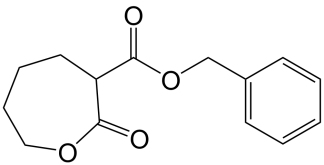
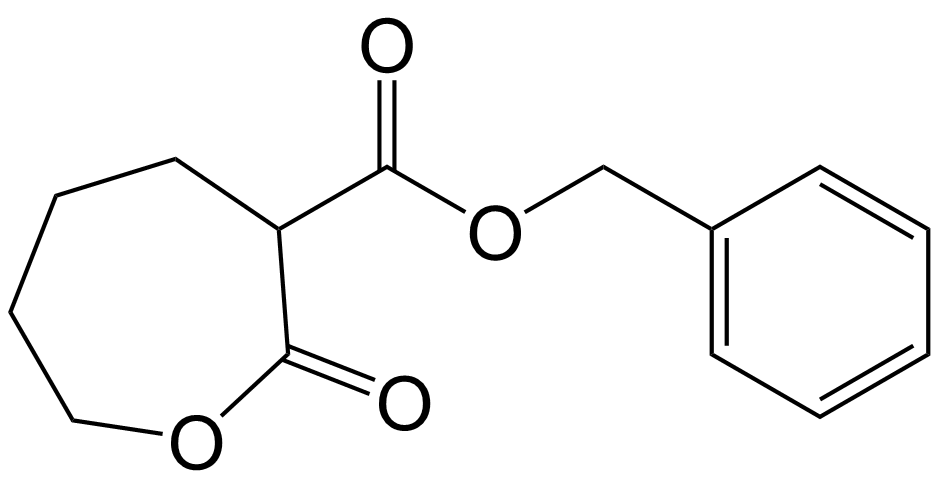
Name:α-Benzylcarboxylate-ε-caprolactone
CAS#:
Chemical Formula: C14H16O4
Exact Mass: 248.10
Molecular Weight: 248.28
Purity: 98%
Price range: $280.00 through $1,600.00
BCL (α-Benzyl Carboxylate-ε-Caprolactone) is a functionalized ε-caprolactone monomer containing a benzyl-protected carboxylic acid side group. The monomer can be polymerized through ring-opening polymerization to produce functional polyesters with pendant carboxylic acid functionalities following deprotection. BCL is widely used in the synthesis of biodegradable polymers, drug delivery materials, polymeric micelles, and advanced biomaterials.
Product Name: BCL
Full Name: α-Benzyl Carboxylate-ε-Caprolactone
Molecular Formula: C14H16O4
Molecular Weight: 248.28 g/mol
Appearance: White to off-white solid or crystalline powder
Purity: Typically ≥98%
Storage: -20°C, dry and protected from light
Name:α-Benzylcarboxylate-ε-caprolactone
CAS#:
Chemical Formula: C14H16O4
Exact Mass: 248.10
Molecular Weight: 248.28
Purity: 98%
BCL (α-Benzyl Carboxylate-ε-Caprolactone) is a modified caprolactone monomer designed to introduce reactive pendant functional groups into biodegradable polyester backbones. The benzyl-protected carboxylate group remains stable during ring-opening polymerization while allowing subsequent deprotection to generate carboxylic acid-functionalized polymers.
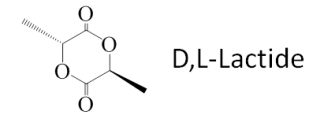
BCL is frequently copolymerized with ε-caprolactone, lactide, glycolide, and PEG-containing initiators to produce functional biodegradable polymers with tunable physicochemical properties. Following deprotection, the resulting polymers provide reactive carboxyl groups for conjugation with peptides, proteins, drugs, targeting ligands, and other biomolecules. BCL has become an important building block for drug delivery systems, polymer therapeutics, tissue engineering scaffolds, and nanomedicine applications.
| Package size | 500mg, 1g, 5g |
|---|