Description
General Description
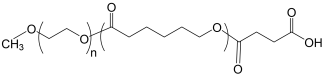
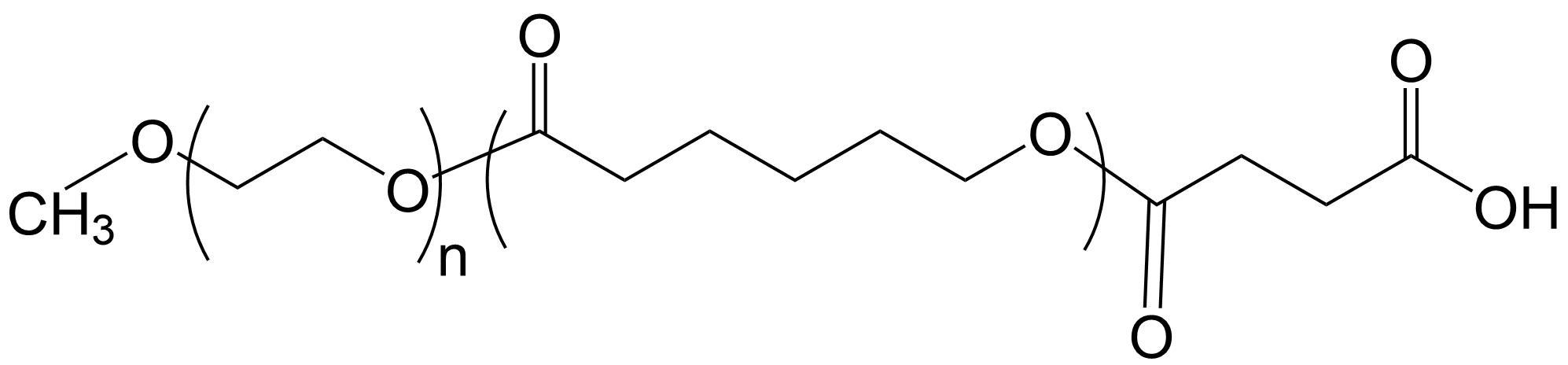
mPEG-PCL-COOH is a tin-free biodegradable block copolymer widely used in drug delivery, nanomedicine, and biomaterials research. The amphiphilic structure allows self-assembly into polymeric micelles and nanoparticles with a hydrophobic PCL core for encapsulation of hydrophobic therapeutics and a hydrophilic PEG shell that improves circulation properties and stability.
The terminal carboxyl group can be activated through EDC/NHS chemistry for conjugation to peptides, proteins, antibodies, fluorophores, targeting ligands, and other amine-containing molecules. This functionality enables the development of targeted nanocarriers and multifunctional drug delivery systems.
Applications
- Polymeric micelle preparation
- Nanoparticle fabrication
- Drug delivery systems
- Targeted drug delivery
- Peptide conjugation
- Antibody conjugation
- Surface modification
- Controlled drug release
- Nanomedicine research
- Biomaterials engineering
Features and Benefits
- Tin-free synthesis process
- Biodegradable PCL block
- Hydrophilic PEG segment improves biocompatibility
- Reactive carboxyl group for further conjugation
- Self-assembles into nanoparticles and micelles
- Suitable for hydrophobic drug encapsulation
- Compatible with EDC/NHS coupling chemistry
- Available in multiple molecular weight combinations