Description
General Description
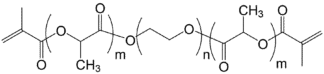
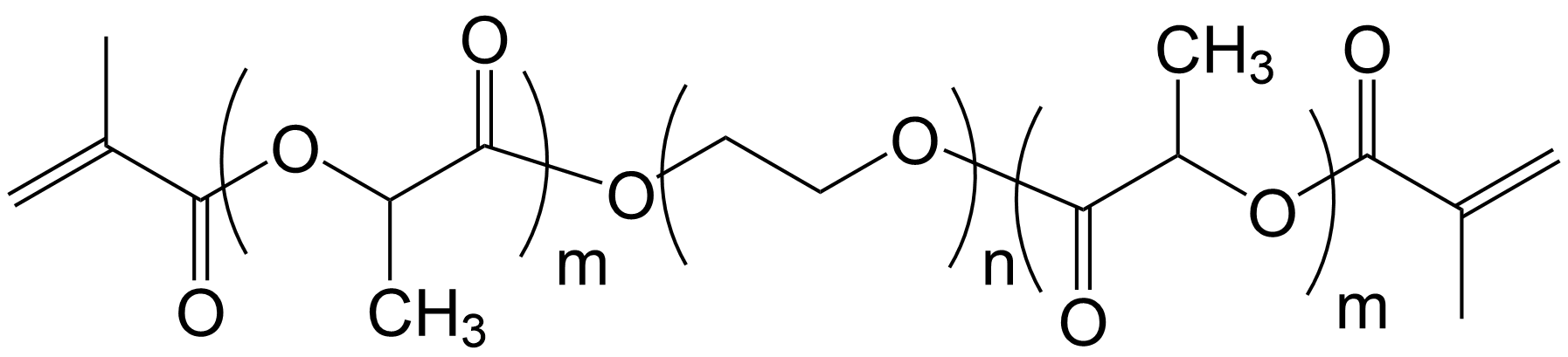
PDLLA-PEG-PDLLA Dimethacrylate consists of a hydrophilic PEG segment flanked by biodegradable PDLLA blocks and terminated with methacrylate groups at both chain ends. The PDLLA segments provide biodegradability and hydrophobic interactions, while the PEG segment imparts hydrophilicity, flexibility, and biocompatibility. The terminal methacrylate groups allow efficient photocrosslinking under mild conditions using suitable photoinitiators.
Upon exposure to UV or visible light, PDLLA-PEG-PDLLA Dimethacrylate forms stable crosslinked hydrogel networks with tunable mechanical properties and degradation profiles. These characteristics make the polymer particularly useful for cell encapsulation, tissue scaffolds, controlled drug release systems, and biofabrication applications. The material combines the advantages of biodegradable polyesters with the processability of photocurable hydrogel precursors.
Applications
- Photocrosslinkable hydrogel formation
- Tissue engineering scaffolds
- Regenerative medicine
- Injectable hydrogels
- 3D bioprinting
- Cell encapsulation
- Controlled drug delivery
- Wound healing materials
- Biomaterials research
- Biofabrication
Features and Benefits
- Reactive methacrylate end groups
- Rapid photocrosslinking capability
- Biodegradable PDLLA segments
- Hydrophilic PEG core
- Tunable degradation profiles
- Excellent biocompatibility
- Suitable for injectable formulations
- Supports cell growth and tissue regeneration
- Available in various PDLLA and PEG molecular weights