
Description
General Description
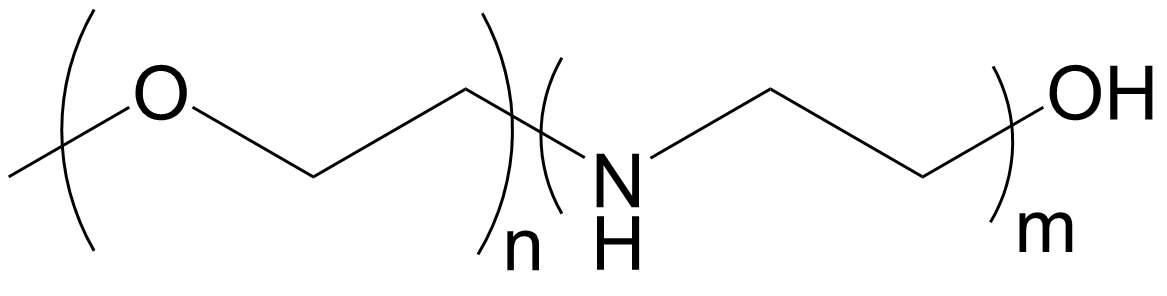
PEI-g-PEG is synthesized by covalently grafting PEG chains onto a polyethyleneimine backbone. This modification reduces the cytotoxicity commonly associated with unmodified PEI while maintaining its ability to complex negatively charged biomolecules such as DNA, RNA, siRNA, and mRNA.
The combination of PEI and PEG provides an attractive balance between transfection efficiency and biocompatibility. PEGylation improves aqueous stability, reduces non-specific interactions, and enhances circulation time in biological systems. PEI-g-PEG is commonly utilized in non-viral gene delivery systems, nucleic acid therapeutics, nanoparticle formulations, and tissue engineering applications.
Applications
- Gene delivery
- DNA transfection
- siRNA delivery
- mRNA delivery
- CRISPR/Cas delivery systems
- Nanoparticle surface modification
- Drug delivery systems
- Tissue engineering
- Biomaterials research
- Cell culture applications
Features and Benefits
- Combines cationic PEI with biocompatible PEG
- Improved biocompatibility compared to unmodified PEI
- Excellent water solubility
- Efficient nucleic acid complexation
- Reduced aggregation and non-specific interactions
- Enhanced colloidal stability
- Suitable for nanoparticle functionalization
- Available with various PEI and PEG molecular weights
- Useful for non-viral gene delivery applications