
Description
General Description
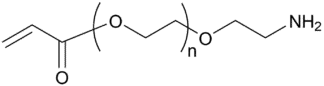
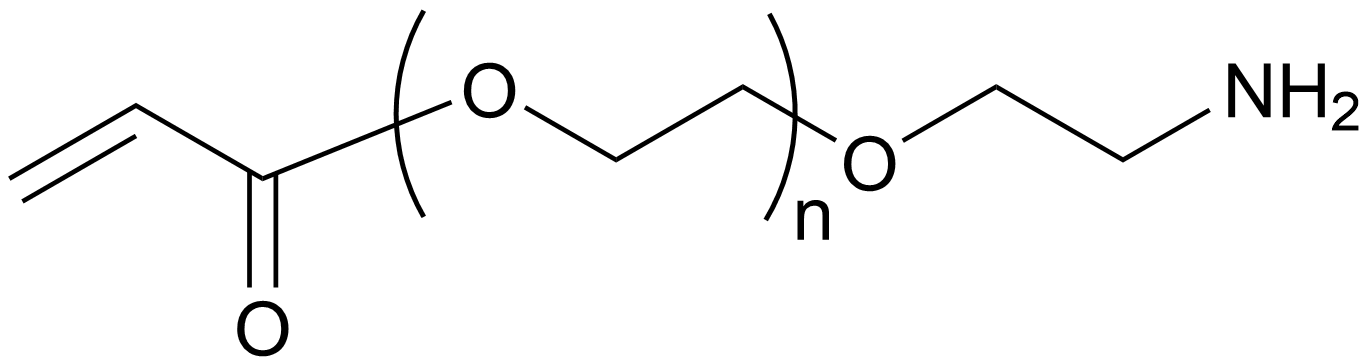
Acrylate-PEG-Amine (Acryl-PEG-NH2) is a versatile heterobifunctional polyethylene glycol derivative designed for polymer chemistry, biomaterials engineering, and bioconjugation. The terminal acrylate group readily participates in free-radical polymerization, photopolymerization, and Michael addition reactions, enabling incorporation into polymer matrices, hydrogels, and crosslinked networks.
The terminal primary amine group serves as a highly versatile reactive handle for coupling with activated esters, carboxylic acids, aldehydes, epoxides, and other functional groups. The PEG spacer improves water solubility, flexibility, and biocompatibility while minimizing steric hindrance. Acrylate-PEG-Amine is widely used in hydrogel functionalization, surface engineering, targeted drug delivery, tissue engineering, and advanced biomaterials development.
Applications
- Hydrogel synthesis
- Photopolymerization
- Tissue engineering
- Surface modification
- Protein conjugation
- Peptide conjugation
- Drug delivery systems
- Biomaterials development
- Polymer functionalization
- Bioconjugation
Features and Benefits
- Reactive acrylate group
- Terminal primary amine functionality
- Suitable for free-radical polymerization
- Compatible with NHS ester coupling chemistry
- Versatile bioconjugation capability
- Hydrophilic PEG spacer
- Excellent aqueous solubility
- Improves biocompatibility
- Available in multiple PEG molecular weights