


Description
General Description
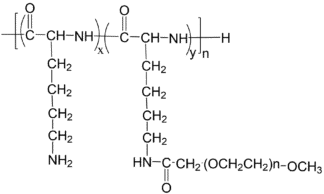
mPEG-Poly(L-Aspartic Acid) is an amphiphilic diblock copolymer designed for advanced drug delivery and nanomedicine applications. The methoxy PEG segment provides excellent aqueous solubility, prolonged circulation time, reduced immunogenicity, and minimizes nonspecific protein adsorption. The terminal methoxy group also prevents unwanted crosslinking, making the polymer suitable for reproducible nanoparticle formulations.
The biodegradable poly(L-aspartic acid) segment contains numerous pendant carboxylic acid groups that can be activated using EDC/NHS chemistry or peptide-coupling reagents for conjugation with drugs, peptides, proteins, antibodies, imaging agents, and targeting ligands.
Due to its amphiphilic structure, mPEG-pAsp readily self-assembles into polymeric micelles and nanoparticles capable of encapsulating hydrophobic therapeutics or serving as polymer-drug conjugates. The polymer is widely used in controlled drug delivery, nanomedicine, hydrogel preparation, tissue engineering, and biomedical research.
Applications
- Drug delivery systems
- Polymeric micelles
- Polymer-drug conjugates
- Nanoparticle preparation
- Hydrogel synthesis
- Protein and peptide conjugation
- Tissue engineering
- Molecular imaging
- Surface modification
- Biomaterials research
Features and Benefits
- Amphiphilic diblock copolymer
- Hydrophilic mPEG segment
- Biodegradable poly(L-aspartic acid) block
- Multiple pendant carboxylic acid groups
- Excellent water solubility
- Excellent biocompatibility
- Self-assembles into nanoparticles
- Available in various PEG and pAsp molecular weights

Reviews
There are no reviews yet.