
Description
General Description
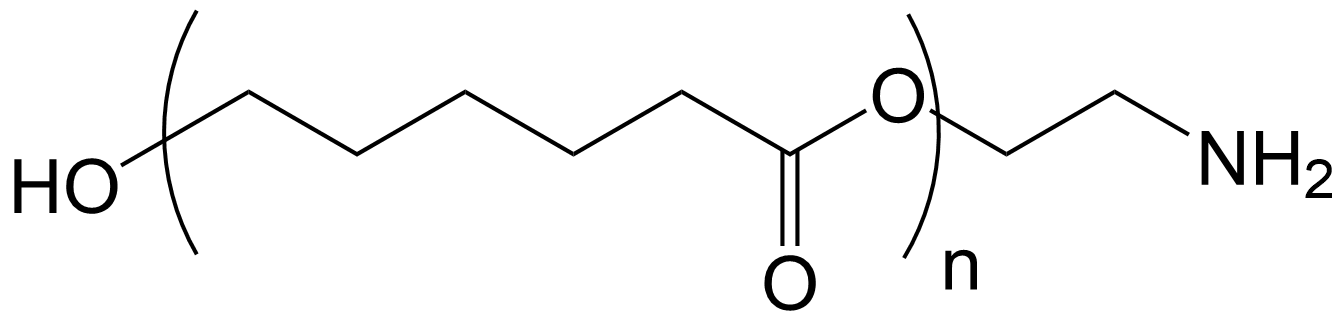
PCL-Amine (PCL-NH₂), also known as amine-functionalized poly(ε-caprolactone) or amino-PCL, is a biodegradable polyester containing a terminal primary amine (NH₂) functional group.
Poly(ε-caprolactone) (PCL) is a hydrophobic, biodegradable aliphatic polyester widely used in biomaterials and drug delivery research. Introduction of a terminal amine provides a reactive site for further chemical modification while retaining the hydrophobic and biodegradable characteristics of the PCL chain.
The primary amine can react with NHS esters, activated carboxylic acids, aldehydes, isocyanates, and other amine-reactive compounds. PCL-NH₂ can therefore be used as a building block for preparing functional polymers, polymer-drug conjugates, ligand-functionalized materials, and amphiphilic block copolymers.
Applications
- Biodegradable polymer conjugation
- Nanoparticle preparation
- Drug delivery research
- Block copolymer synthesis
- Polymer-drug conjugates
- Ligand conjugation
- Surface functionalization
- Biomaterials research
- Polymer-protein and polymer-peptide conjugation
- Synthesis of functional PCL derivatives
Features and Benefits
- Terminal primary amine (NH₂)
- Biodegradable PCL backbone
- Hydrophobic polyester segment
- Reactive toward NHS esters and activated carboxylic acids
- Suitable for further polymer functionalization
- Useful for block copolymer synthesis
- Multiple molecular weights available
- Custom molecular weights available