
Description
General Description
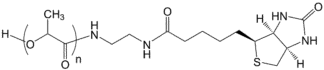
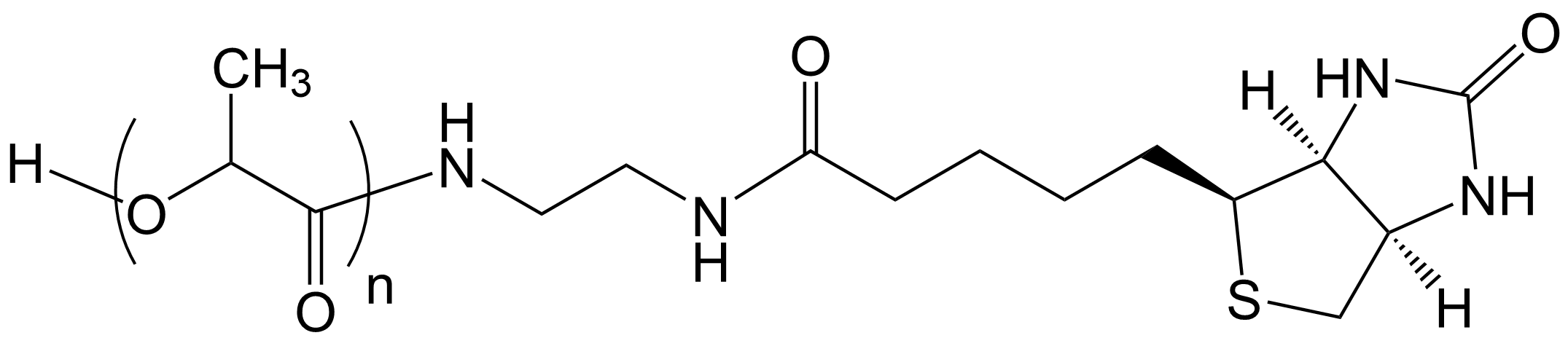
PDLLA-Biotin (PDLLA-Bio) is a functional aliphatic polyester derived from D,L-lactide. Unlike crystalline PLLA, PDLLA is amorphous, resulting in more uniform degradation behavior and broader applicability in pharmaceutical and biomedical applications.
The terminal biotin group enables highly specific interaction with streptavidin, avidin, and neutravidin, allowing efficient immobilization of proteins, antibodies, peptides, enzymes, nanoparticles, fluorophores, and targeting ligands. PDLLA-Biotin is frequently employed in nanoparticle preparation, targeted drug delivery systems, polymer-drug conjugates, molecular diagnostics, tissue engineering scaffolds, and advanced biomaterials development.
Applications
- Drug delivery systems
- Nanoparticle formulation
- Targeted drug delivery
- Streptavidin-mediated targeting
- Protein immobilization
- Antibody conjugation
- Molecular imaging
- Diagnostic assay development
- Tissue engineering
- Biomaterials research
Features and Benefits
- Biodegradable PDLLA backbone
- Amorphous polymer structure
- Terminal biotin functionality
- High-affinity streptavidin binding
- Excellent biocompatibility
- Controlled degradation behavior
- Suitable for targeted delivery systems
- Easy bioconjugation and immobilization
- Available in multiple molecular weights