

Description
General Description
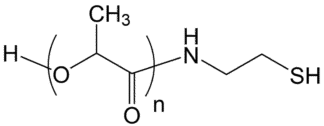
PLLA-Thiol (PLLA-SH) is a functional aliphatic polyester derived from L-lactide. Unlike amorphous PDLLA, PLLA possesses a semi-crystalline structure, resulting in higher mechanical strength, improved thermal properties, and slower degradation behavior.
The terminal thiol group readily reacts with maleimides, vinyl sulfones, acrylates, and activated disulfides, enabling efficient conjugation with peptides, proteins, antibodies, fluorophores, nanoparticles, and targeting ligands. PLLA-SH is frequently employed in nanoparticle preparation, polymer-drug conjugates, biodegradable implants, hydrogel formation, tissue engineering scaffolds, and controlled drug delivery systems.
Applications
- Drug delivery systems
- Nanoparticle formulation
- Polymer-drug conjugates
- Tissue engineering
- Biodegradable implants
- Surface modification
- Protein conjugation
- Peptide conjugation
- Hydrogel preparation
- Biomaterials research
Features and Benefits
- Biodegradable PLLA backbone
- Semi-crystalline polymer structure
- Reactive thiol functionality
- Excellent biocompatibility
- Superior mechanical strength
- Slower degradation profile than PDLLA
- Suitable for thiol-specific bioconjugation
- Easy chemical modification
- Available in multiple molecular weights