


Description
General Description
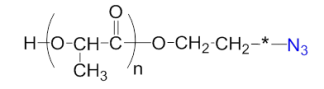
Poly(L-lactide)(PLLA) is a synthetic biodegradable polymer prepared from the ring-opening polymerization of L-lactide. Unlike PDLLA, which is amorphous, PLLA possesses a semi-crystalline structure that provides higher mechanical strength, improved thermal properties, and slower degradation rates.
PLLA undergoes hydrolytic degradation into lactic acid, a naturally occurring metabolite that is ultimately removed through normal metabolic pathways. Its combination of biodegradability, biocompatibility, and mechanical robustness has led to widespread use in absorbable sutures, orthopedic fixation devices, tissue engineering scaffolds, drug delivery systems, nanoparticles, and regenerative medicine applications.
Nanosoft Polymers offers PLLA in a variety of molecular weights and functional end groups, including hydroxyl, carboxyl, amine, thiol, azide, biotin, maleimide, NHS ester, and PEG-based copolymers.
Applications
- Drug delivery systems
- Nanoparticle formulation
- Controlled drug release
- Tissue engineering
- Regenerative medicine
- Biodegradable implants
- Orthopedic fixation devices
- Medical devices
- Microspheres and nanoparticles
- Biomaterials research
Features and Benefits
- Biodegradable polyester
- Semi-crystalline polymer structure
- Excellent biocompatibility
- Superior mechanical strength
- Slower degradation profile than PDLLA
- Hydrolyzes to lactic acid
- Suitable for long-term biomedical applications
- Available in multiple molecular weights
- Easily functionalized