
Description
General Description
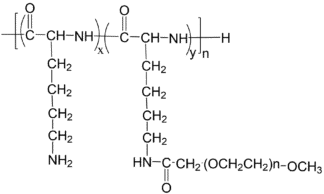
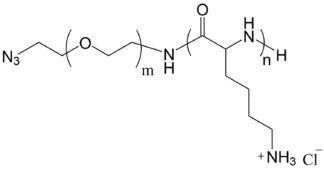
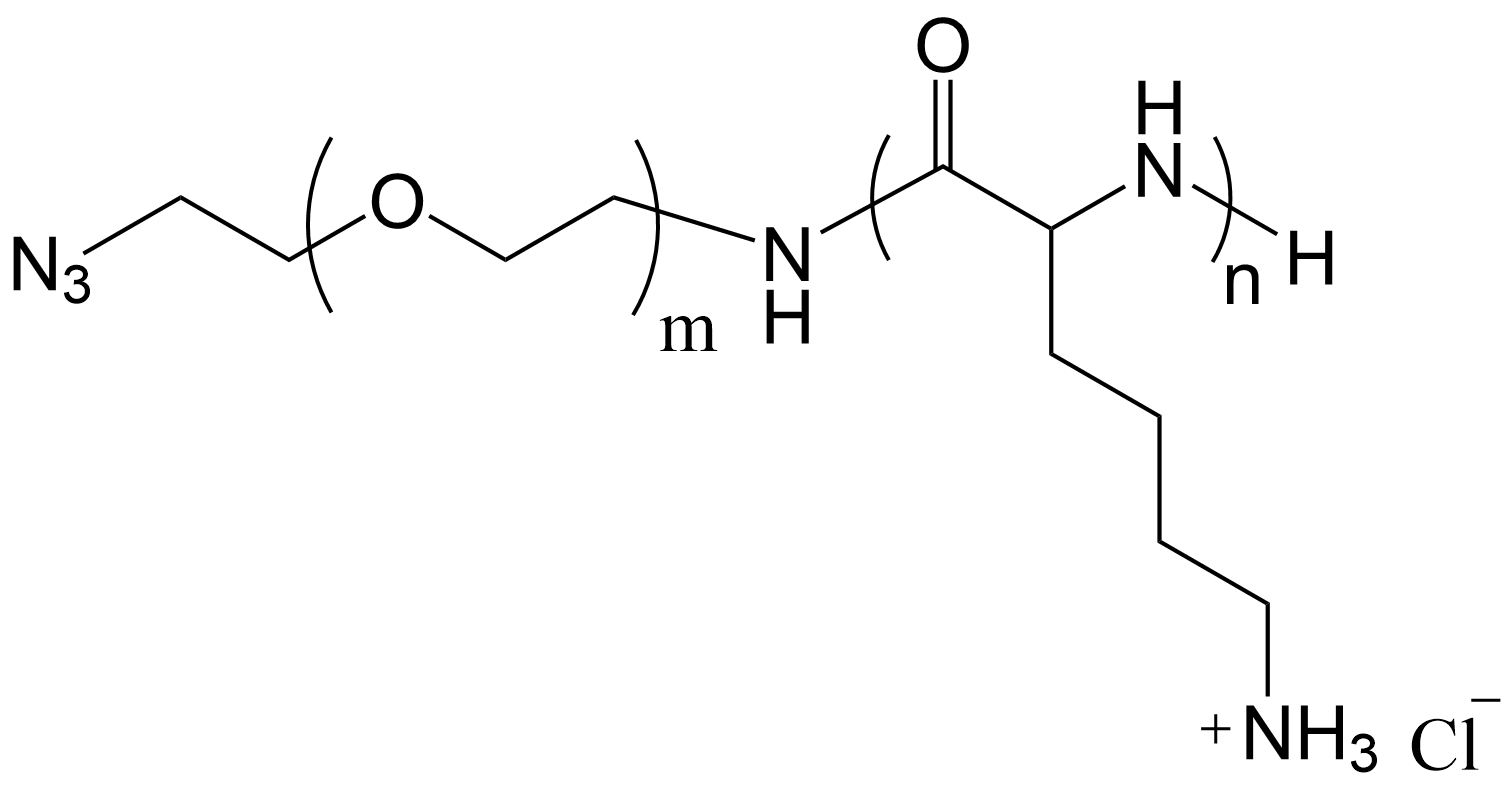
Poly(L-Lysine)-PEG-N3 (PLL-PEG-N3) is a multifunctional PEGylated polypeptide designed for drug delivery and bioorthogonal conjugation. The poly(L-lysine) block contains multiple primary amine groups that efficiently complex DNA, mRNA, siRNA, plasmids, proteins, and other negatively charged biomolecules through electrostatic interactions.
The PEG spacer enhances aqueous solubility, reduces nonspecific protein adsorption, improves colloidal stability, and minimizes the cytotoxicity commonly associated with highly cationic polymers. The terminal azide group provides a highly selective reactive handle for copper-catalyzed azide-alkyne cycloaddition (CuAAC) and strain-promoted azide-alkyne cycloaddition (SPAAC), allowing conjugation of antibodies, peptides, fluorophores, targeting ligands, nanoparticles, and imaging probes.
N₃-PEG-PLL is widely employed in gene delivery systems, RNA therapeutics, nanoparticle functionalization, hydrogel preparation, tissue engineering, molecular imaging, and advanced biomaterials development.
Applications
- Gene delivery
- DNA transfection
- mRNA delivery
- siRNA delivery
- CRISPR delivery
- Click chemistry conjugation
- Nanoparticle functionalization
- Surface modification
- Tissue engineering
- Biomaterials research
Features and Benefits
- Cationic poly(L-lysine) segment
- Reactive azide functionality
- Compatible with CuAAC and SPAAC chemistry
- Improved aqueous solubility
- Reduced nonspecific protein adsorption
- Enhanced colloidal stability
- Excellent biocompatibility
- Efficient nucleic acid complexation
- Available in multiple PLL and PEG molecular weights