


Description
General Description
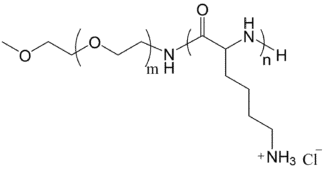
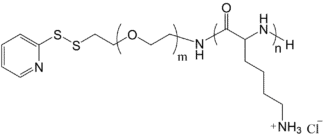
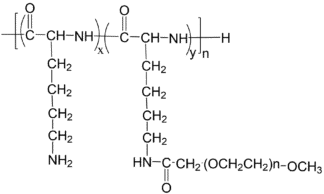
PLL-g-PEG is synthesized by grafting polyethylene glycol chains onto a poly(L-lysine) backbone. The PLL component provides multiple primary amine groups and strong electrostatic interactions with negatively charged surfaces and biomolecules, while PEG improves hydrophilicity, biocompatibility, and resistance to nonspecific protein adsorption.
PLL-g-PEG has become a widely used surface-coating material for biomedical and biotechnology applications. The grafted PEG chains create a steric barrier that minimizes nonspecific adsorption of proteins and cells while maintaining the ability of PLL to adsorb onto negatively charged substrates. PLL-g-PEG is frequently used in biosensors, microfluidic devices, tissue engineering, cell culture platforms, and surface passivation applications.
Applications
- Surface modification
- Antifouling coatings
- Cell culture substrates
- Biosensor development
- Microfluidic device coatings
- Biomolecule immobilization
- Tissue engineering
- Drug delivery research
- Biomedical device coatings
- Biomaterials research
Features and Benefits
- Graft copolymer architecture
- Poly(L-lysine) backbone for surface adsorption
- Hydrophilic PEG chains reduce nonspecific binding
- Excellent biocompatibility
- Improves surface passivation
- Reduces protein adsorption
- Suitable for cell culture applications
- Compatible with biological systems
- Available in various PLL and PEG molecular weights