
Description
General Description
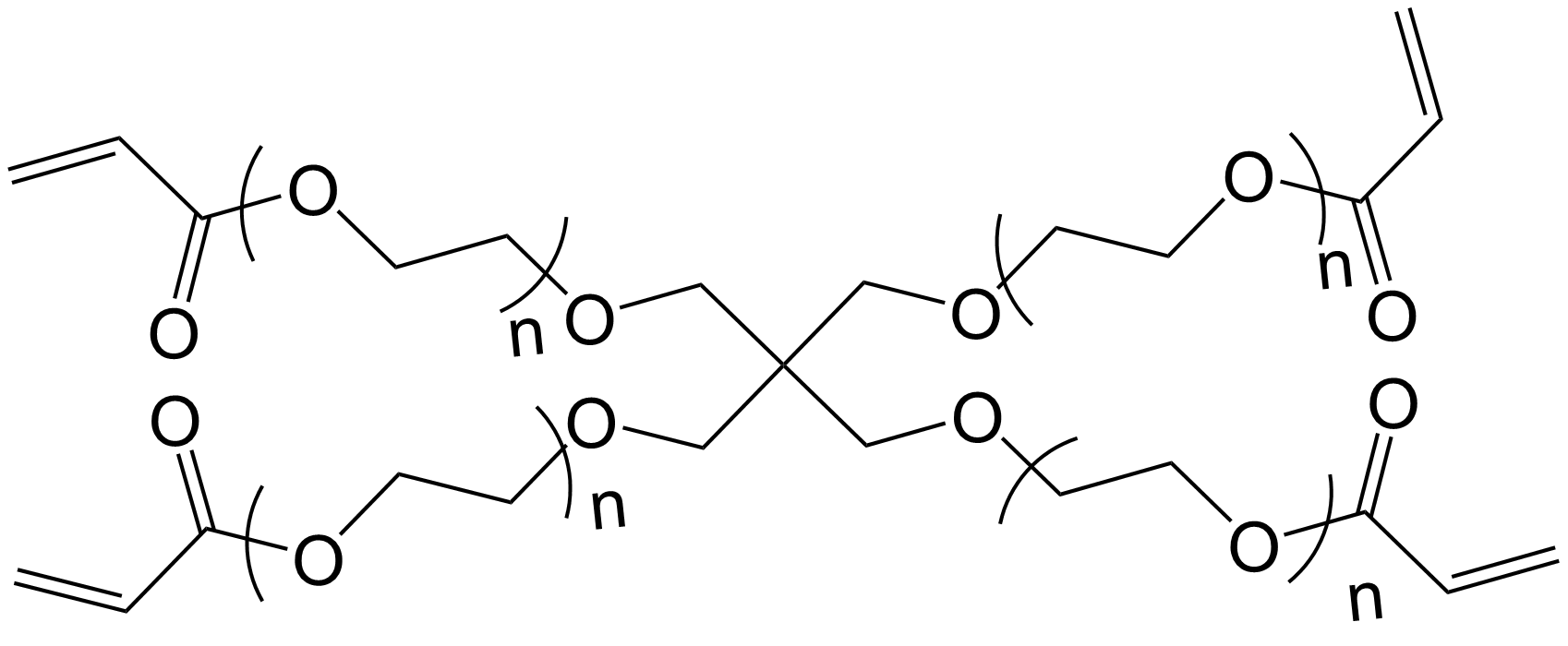
4-arm PEG-Acrylate is a branched PEG macromer designed for hydrogel synthesis and advanced biomaterials applications. Compared with linear PEG derivatives, the four-arm architecture provides higher functional group density, enhanced crosslinking efficiency, and improved network formation.
The terminal acrylate groups readily react with thiols, amines, and other vinyl-reactive species and can undergo UV-initiated or visible-light photopolymerization to form highly hydrated hydrogel networks. The PEG backbone provides excellent water solubility, flexibility, biocompatibility, and resistance to nonspecific protein adsorption.
4-arm PEG-Acrylate is frequently employed in injectable hydrogels, tissue engineering scaffolds, cell encapsulation, 3D bioprinting, drug delivery systems, wound healing materials, and regenerative medicine applications.
Applications
- Hydrogel synthesis
- Injectable hydrogels
- Tissue engineering
- Cell encapsulation
- 3D bioprinting bioinks
- Drug delivery systems
- Wound healing materials
- Regenerative medicine
- Biomaterials engineering
- Biomedical research
Features and Benefits
- Four terminal acrylate groups
- Multi-arm PEG architecture
- High crosslinking efficiency
- Photopolymerizable macromer
- Suitable for thiol-ene chemistry
- Excellent water solubility
- Excellent biocompatibility
- Low protein adsorption
- Available in multiple molecular weights


