
Description
General Description
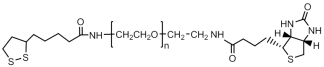
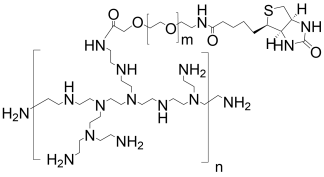
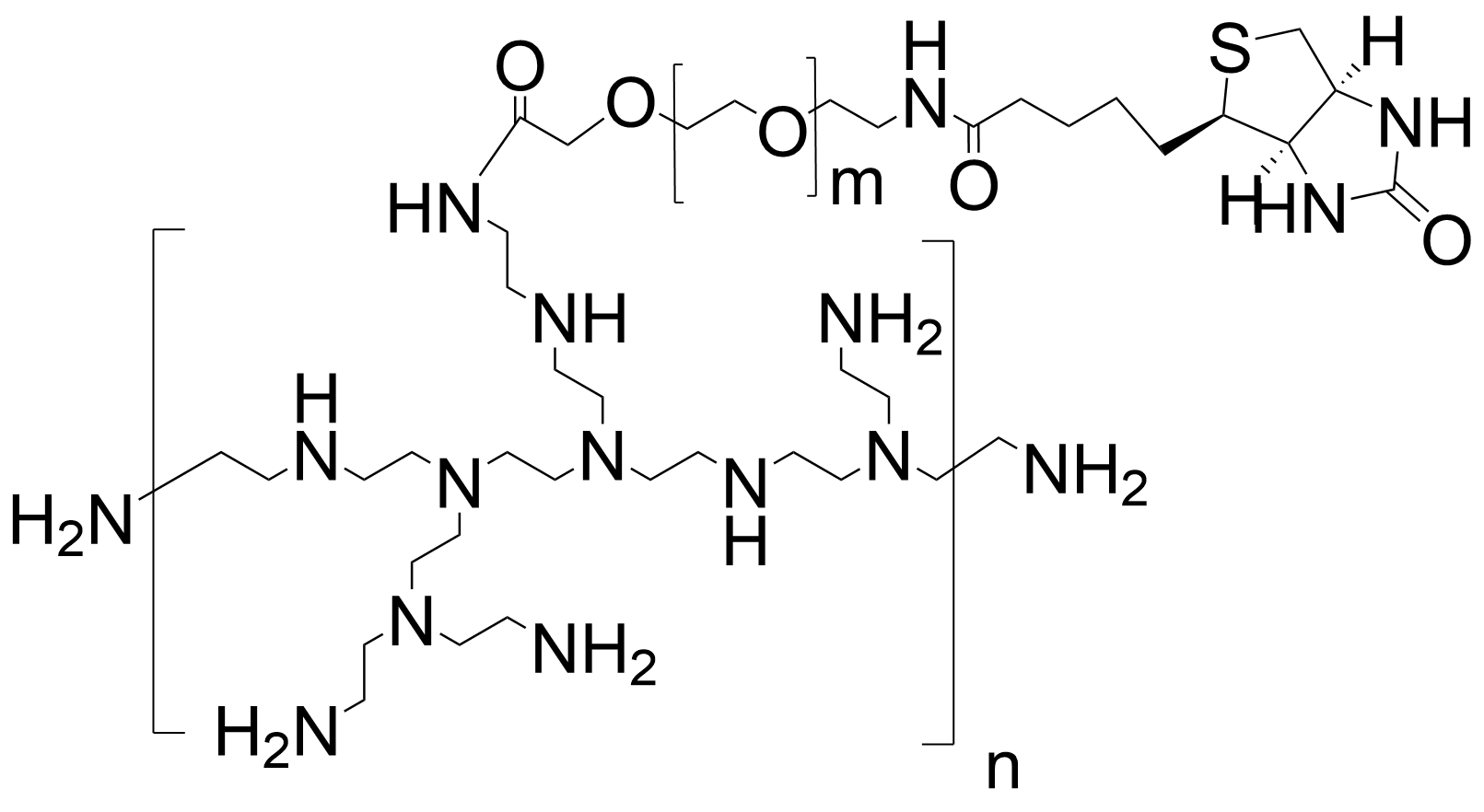
PEI-g-PEG-Biotin is a multifunctional polymer conjugate composed of polyethyleneimine (PEI), polyethylene glycol (PEG), and terminal biotin groups. The PEI backbone provides cationic charge for nucleic acid complexation, PEG improves biocompatibility and colloidal stability, and the biotin moiety enables streptavidin-mediated targeting and bioconjugation.
Key Properties
- Cationic PEI-based polymer conjugate
- PEGylated structure improves aqueous stability and biocompatibility
- Terminal biotin functionality for avidin/streptavidin binding
- Suitable for nucleic acid delivery and nanoparticle engineering
- Multifunctional drug delivery material
Applications
- Gene and nucleic acid delivery
- siRNA and mRNA delivery research
- Streptavidin-mediated targeting systems
- Nanoparticle surface functionalization
- Drug delivery and nanomedicine applications
- Biomaterial and hydrogel engineering
Functional Overview
The PEI segment provides electrostatic interaction with negatively charged nucleic acids, while PEG improves steric stabilization and reduces aggregation. The terminal biotin group enables selective interaction with streptavidin-containing targeting and diagnostic systems.
Summary
PEI-g-PEG-Biotin is a versatile multifunctional polymer conjugate widely used in gene delivery, targeted nanomedicine, and advanced bioconjugation applications.