
Description
General Description
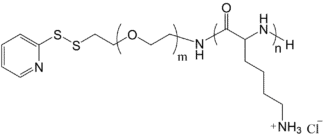
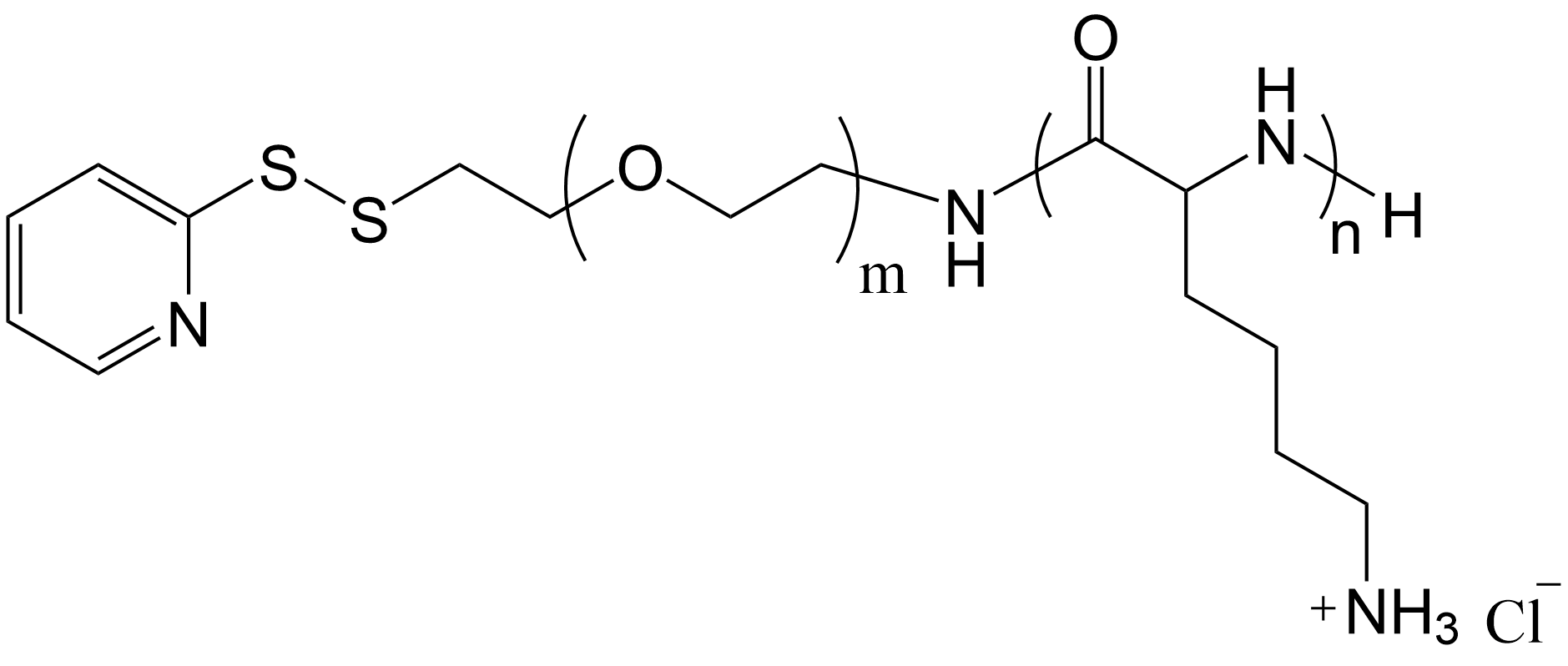
PLL-PEG-OPSS is a multifunctional PEGylated polypeptide designed for reversible bioconjugation and biointerface engineering. The poly(L-lysine) backbone contains multiple primary amine groups that readily adsorb onto negatively charged substrates such as glass, silica, metals, and polymeric materials, while also interacting electrostatically with nucleic acids and proteins.
The PEG spacer enhances aqueous solubility, reduces nonspecific protein adsorption, minimizes aggregation, and improves biocompatibility. The terminal OPSS group reacts selectively with free sulfhydryl (thiol) groups on peptides, proteins, antibodies, and other thiol-containing molecules through disulfide exchange, forming cleavable disulfide linkages while releasing pyridine-2-thione. This chemistry is particularly useful for redox-responsive drug delivery systems and reversible biomolecule immobilization.
PLL-PEG-OPSS is widely employed in nanoparticle functionalization, protein conjugation, biosensor fabrication, intracellular drug delivery, hydrogel preparation, tissue engineering, and advanced biomaterials development.
Applications
- Thiol-specific bioconjugation
- Protein conjugation
- Antibody conjugation
- Nanoparticle functionalization
- Surface modification
- Biosensor fabrication
- Redox-responsive drug delivery
- Tissue engineering
- Hydrogel synthesis
- Biomaterials research
Features and Benefits
- Poly(L-lysine) backbone
- Reactive OPSS functionality
- Selective thiol conjugation
- Forms cleavable disulfide bonds
- Hydrophilic PEG spacer
- Reduced nonspecific protein adsorption
- Excellent colloidal stability
- Excellent biocompatibility
- Available with customizable PEG substitution