
Description
General Description
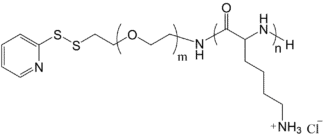
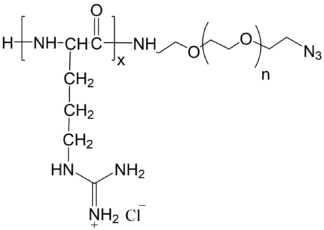
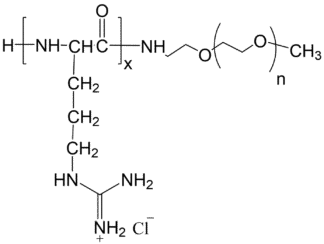
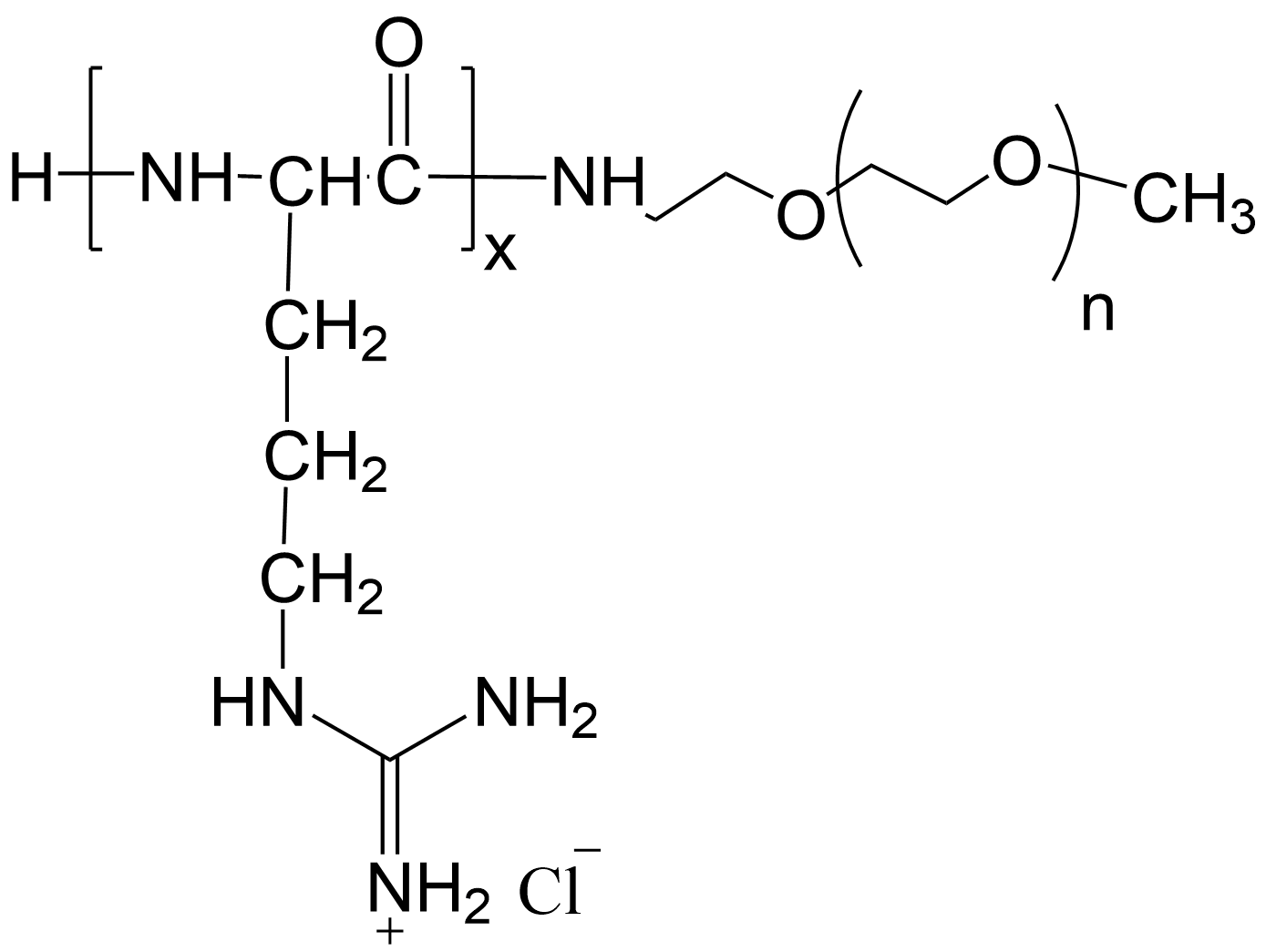
Poly(L-Arginine)-mPEG is a PEGylated polypeptide designed to combine the biological activity of poly(L-arginine) with the stealth properties of polyethylene glycol. The poly(L-arginine) backbone contains positively charged guanidinium groups that efficiently bind DNA, mRNA, siRNA, plasmids, proteins, and other negatively charged biomolecules through electrostatic interactions. In addition, the guanidinium groups promote cellular uptake through membrane interactions, making poly(L-arginine) an attractive carrier for intracellular delivery.
The grafted methoxy PEG chains improve water solubility, reduce aggregation, decrease nonspecific protein adsorption, and minimize the cytotoxicity commonly associated with highly cationic polymers. The methoxy-terminated PEG provides a biologically inert terminus that enhances colloidal stability and prolongs circulation time.
Poly(L-Arginine)-mPEG is widely employed in gene delivery systems, RNA therapeutics, nanoparticle formulation, tissue engineering, biomaterials development, and targeted drug delivery research.
Applications
- Gene delivery
- DNA transfection
- mRNA delivery
- siRNA delivery
- CRISPR delivery
- Nanoparticle formulation
- Drug delivery systems
- Tissue engineering
- Biomaterials engineering
- Biomedical research
Features and Benefits
- Cationic poly(L-arginine) backbone
- Excellent nucleic acid binding capability
- Cell-penetrating properties
- Improved water solubility through PEGylation
- Reduced cytotoxicity
- Enhanced colloidal stability
- Reduced nonspecific protein adsorption
- Excellent biocompatibility
- Available with customizable PEG substitution