
Description
General Description
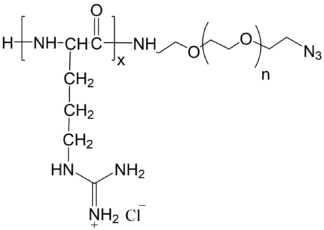
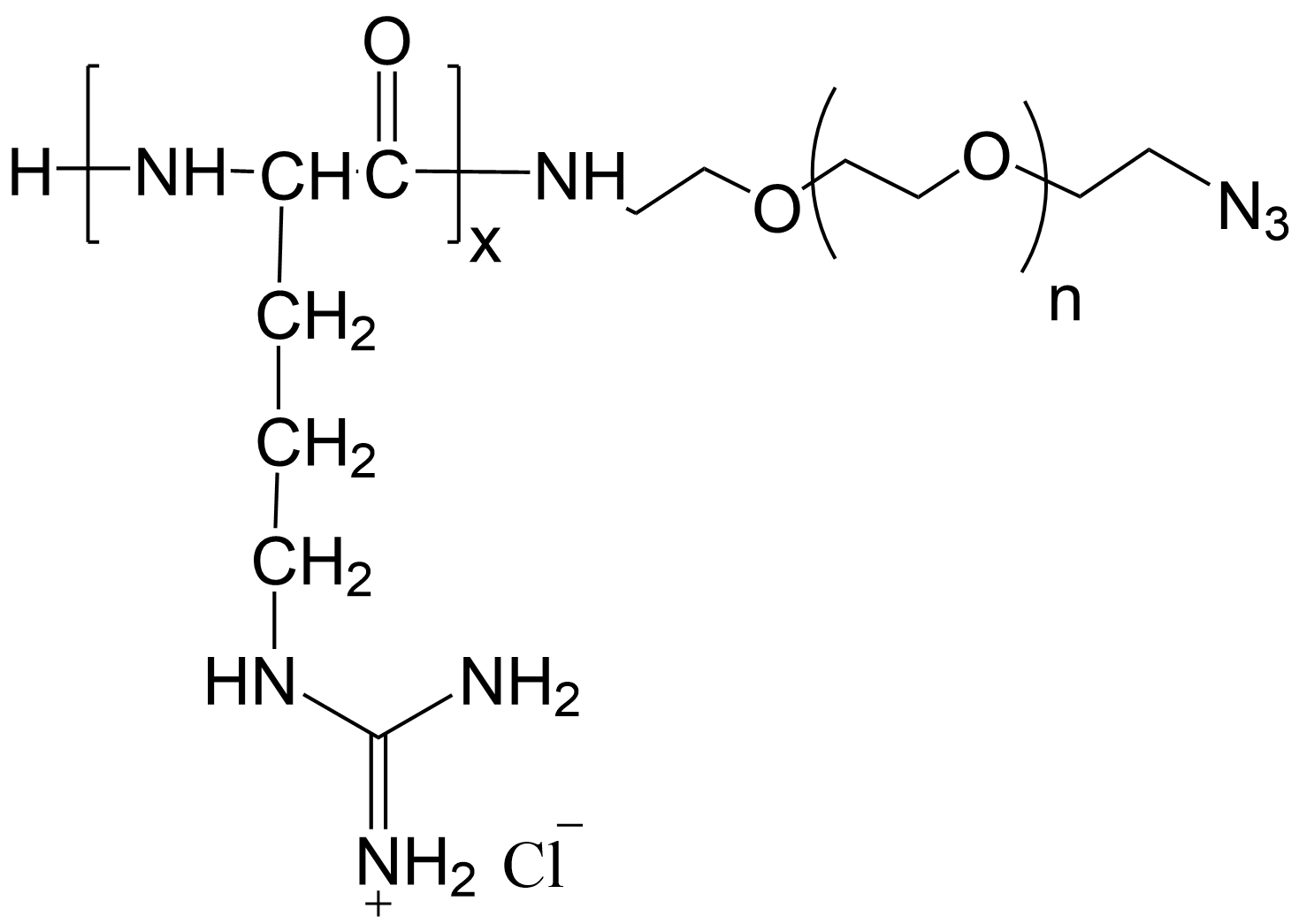
Poly(L-Arginine)-PEG-N3 is a multifunctional PEGylated polypeptide designed for advanced drug delivery and bioorthogonal conjugation applications. The poly(L-arginine) backbone contains positively charged guanidinium groups that efficiently complex DNA, mRNA, siRNA, plasmids, proteins, and other negatively charged biomolecules. In addition, the guanidinium groups facilitate cellular uptake, making Poly(L-Arginine) one of the most effective cell-penetrating polypeptides.
PEG grafting improves aqueous solubility, reduces aggregation, decreases nonspecific protein adsorption, enhances colloidal stability, and minimizes the cytotoxicity associated with highly cationic polymers. The terminal azide groups provide a versatile platform for copper-catalyzed azide-alkyne cycloaddition (CuAAC) and strain-promoted azide-alkyne cycloaddition (SPAAC), enabling conjugation of antibodies, peptides, fluorophores, targeting ligands, nanoparticles, and imaging probes.
Poly(L-Arginine)-PEG-N3 is widely employed in gene delivery systems, RNA therapeutics, nanoparticle functionalization, tissue engineering, molecular imaging, hydrogel preparation, and advanced biomaterials development.
Applications
- Gene delivery
- DNA transfection
- mRNA delivery
- siRNA delivery
- CRISPR delivery
- Click chemistry conjugation
- Nanoparticle functionalization
- Targeted drug delivery
- Tissue engineering
- Biomaterials research
Features and Benefits
- Cationic poly(L-arginine) backbone
- Excellent nucleic acid binding capability
- Cell-penetrating properties
- Reactive azide functionality
- Compatible with CuAAC and SPAAC chemistry
- Improved aqueous solubility through PEGylation
- Reduced cytotoxicity
- Enhanced colloidal stability
- Available with customizable PEG substitution