
Description
General Description
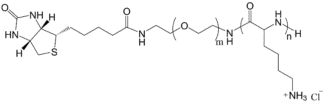
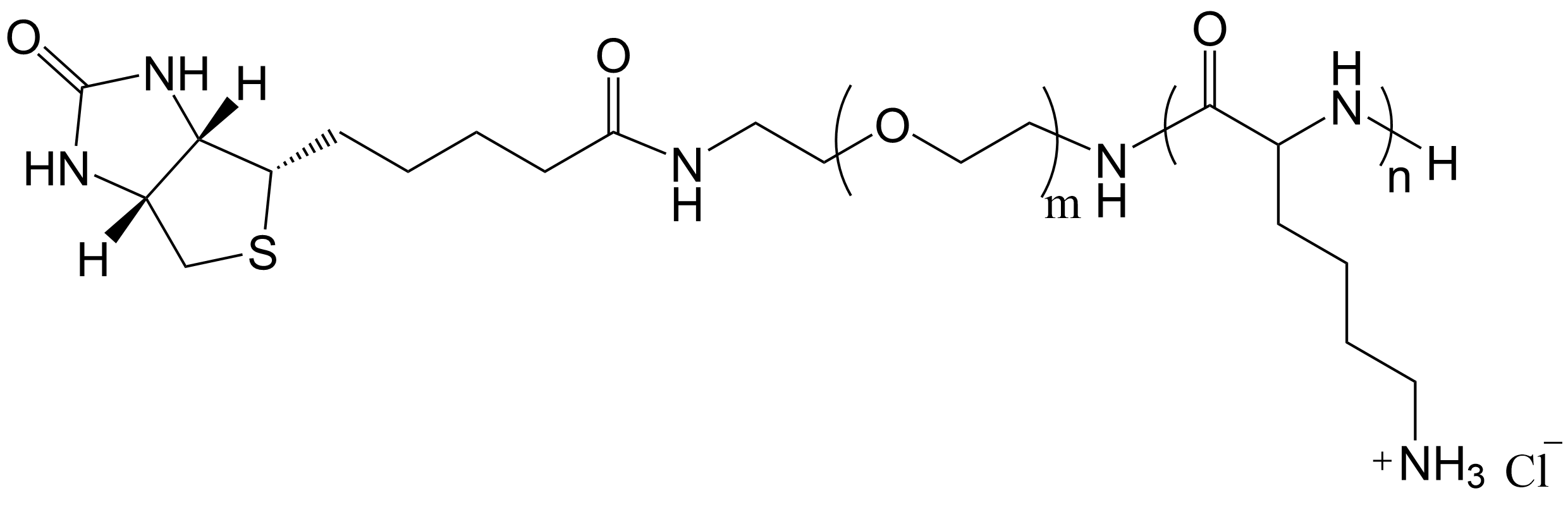
PLL-PEG-Biotin is a multifunctional PEGylated polypeptide designed for bioconjugation and biointerface engineering. The poly(L-lysine) backbone contains multiple primary amine groups that readily adsorb onto negatively charged substrates such as glass, silica, metals, and polymeric materials, while also interacting electrostatically with nucleic acids and proteins.
The PEG spacer enhances aqueous solubility, reduces nonspecific protein adsorption, minimizes aggregation, and improves biocompatibility. The terminal biotin group binds with exceptionally high affinity to streptavidin and avidin, enabling efficient immobilization of antibodies, enzymes, peptides, nucleic acids, nanoparticles, and other biotinylated or streptavidin-functionalized biomolecules.
PLL-PEG-Biotin is widely employed in biosensor fabrication, cell culture surface modification, nanoparticle functionalization, diagnostic assays, tissue engineering, molecular imaging, and targeted drug delivery.
Applications
- Surface modification
- Biosensor fabrication
- Streptavidin immobilization
- Avidin-biotin conjugation
- Cell culture surface coating
- Nanoparticle functionalization
- Drug delivery systems
- Tissue engineering
- Diagnostic assay development
- Biomaterials research
Features and Benefits
- Poly(L-lysine) backbone
- High-affinity biotin functionality
- Hydrophilic PEG spacer
- Excellent surface adsorption
- Reduced nonspecific protein adsorption
- Improved colloidal stability
- Excellent biocompatibility
- Compatible with streptavidin and avidin systems
- Available with customizable PEG substitution