

Description
General Description
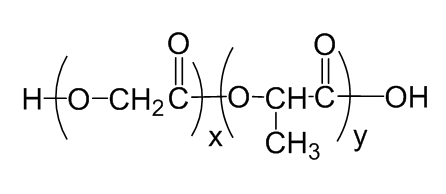
PLGA Acid Capped (75:25) is a carboxyl-terminated biodegradable polyester composed of 75% lactide and 25% glycolide. Compared with PLGA 50:50, the higher lactide content increases hydrophobicity and slows hydrolytic degradation, resulting in a longer drug release profile while maintaining excellent biodegradability and biocompatibility.
The terminal carboxylic acid group provides a versatile reactive handle for conjugation with polyethylene glycol (PEG), peptides, proteins, antibodies, fluorophores, targeting ligands, and other bioactive molecules using carbodiimide (EDC/NHS) coupling chemistry. Consequently, PLGA-COOH (75:25) is frequently used as a precursor for functional PLGA derivatives and targeted drug delivery systems.
PLGA Acid Capped (75:25) is widely employed in polymeric nanoparticles, microspheres, injectable depots, implantable drug delivery systems, tissue engineering scaffolds, and controlled-release formulations requiring moderate-to-long degradation times.
Applications
- Controlled drug delivery
- Sustained-release formulations
- Nanoparticle formulation
- Microsphere preparation
- Injectable depot systems
- PEG conjugation
- Protein conjugation
- Tissue engineering
- Biomaterials development
- Biomedical research
Features and Benefits
- Terminal carboxylic acid functionality
- 75:25 lactide composition
- Intermediate degradation profile
- Efficient EDC/NHS coupling
- Excellent drug encapsulation capability
- Excellent biocompatibility
- Suitable for targeted polymer conjugates
- Available in multiple molecular weights
- Ideal precursor for PLGA derivatives