




Description
General Description
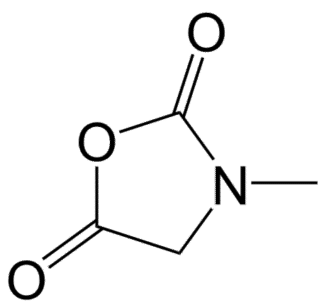
N6-Trifluoroacetyl-L-lysine NCA is the N-carboxyanhydride derivative of N6-trifluoroacetyl-L-lysine. The trifluoroacetyl group effectively protects the lysine side-chain amine during polymerization, allowing controlled synthesis of poly(N6-trifluoroacetyl-L-lysine) and related copolymers through ring-opening polymerization techniques.
Following polymerization, the trifluoroacetyl protecting groups can be removed under appropriate conditions to generate poly(L-lysine) with pendant primary amine functionalities. These amine groups provide versatile reactive sites for conjugation with PEG, peptides, proteins, drugs, fluorophores, targeting ligands, and other biomolecules. N6-Trifluoroacetyl-L-lysine NCA is widely used in the preparation of functional polypeptides, gene delivery materials, nanomedicine platforms, and advanced biomaterials.
Applications
- Poly(L-lysine) synthesis
- Ring-opening polymerization
- Polypeptide synthesis
- Gene delivery materials
- Drug delivery systems
- PEGylated polypeptides
- Nanoparticle preparation
- Biomaterials development
- Tissue engineering
- Polymer conjugation
Features and Benefits
- Protected lysine NCA monomer
- Efficient ring-opening polymerization
- Trifluoroacetyl-protected ε-amine
- Enables synthesis of functional polypeptides
- Controlled polymerization behavior
- Deprotection yields reactive primary amines
- Suitable for block copolymer synthesis
- Excellent versatility in biomaterials research
- Useful precursor for poly(L-lysine)-based polymers
| Chemical name: | N6-Trifluoroacetyl-L-lysine N-Carboxyanhydride, N6-Trifluoroacetyl-L-lysine NCA |
| Synonyms: | N-[4-[(4S)-2,5-Dioxo-4-oxazolidinyl]butyl]-2,2,2-trifluoroacetamide; (S)-N-[4-(2,5-Dioxo-4-oxazolidinyl)butyl]-2,2,2-trifluoroacetamide; Lys(Tfa)-NCA; |
| CAS Number: | 42267-27-6 |
| Possible CAS #: | NA |
| Molecular form.: | C₉H₁₁F₃N₂O₄ |
| Appearance: | White to Off-White Solid |
| Melting Point: | 98-101°C |
| Mol. Weight: | 268.19 |
| Storage: | -20˚C Freezer, Under Inert Atmosphere |
| Solubility: | DMSO, Ethyl Acetate |
| Stability: | No Data Available |
| Category: | Amino Acids & Derivatives, Aromatics, Chiral Reagents, Heterocycles, |
| Boiling Point: | No Data Available |
| Applications: | Used in the synthesis of new arborescent architectures of poly(L-lysine), called lysine dendrigraft (DGL) polymers. DGL polymers were prepd. through a multiple-generation scheme (up to generation 5) in a weakly acidic aq. medium by polycondensing N.vepsiln.-trifluoroacetyl-L-lysine-N-carboxyanhydride (Lys(Tfa)-NCA) onto the previous generation G(n-1) of DGL, which was used as a macroinitiator. |

Reviews
There are no reviews yet.