
Description
General Description
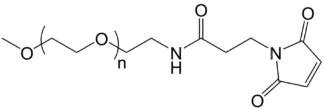
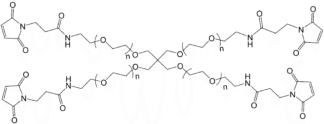
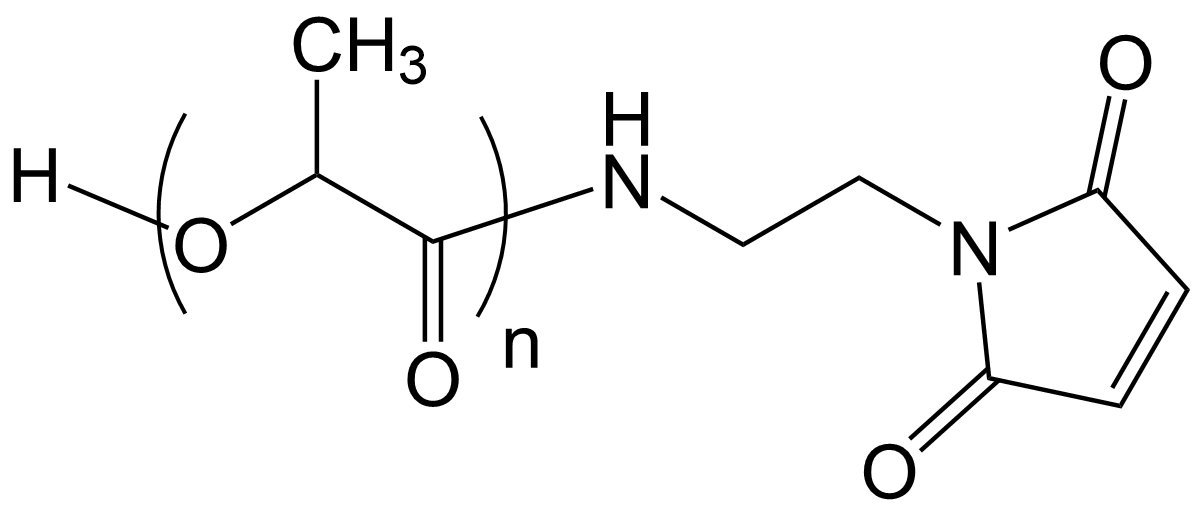
PDLLA-Maleimide (PDLLA-Mal) is a functional aliphatic polyester derived from D,L-lactide. Unlike crystalline PLLA, PDLLA is amorphous, resulting in more uniform degradation behavior and broader applicability in pharmaceutical and biomedical applications.
The terminal maleimide group selectively reacts with sulfhydryl-containing peptides, proteins, antibodies, enzymes, nucleic acids, and targeting ligands under mild conditions to form stable thioether linkages. This highly efficient thiol-maleimide coupling chemistry makes PDLLA-Maleimide an attractive material for bioconjugation, nanoparticle surface modification, polymer-drug conjugates, and targeted delivery systems.
PDLLA-Maleimide is frequently employed in nanoparticle preparation, tissue engineering scaffolds, molecular imaging, hydrogel synthesis, and advanced biomaterials development.
Applications
- Drug delivery systems
- Nanoparticle formulation
- Targeted drug delivery
- Polymer-drug conjugates
- Antibody conjugation
- Peptide conjugation
- Protein conjugation
- Surface modification
- Tissue engineering
- Biomaterials research
Features and Benefits
- Biodegradable PDLLA backbone
- Amorphous polymer structure
- Reactive maleimide functionality
- Efficient thiol-specific conjugation
- Forms stable thioether linkages
- Excellent biocompatibility
- Controlled degradation behavior
- Easy chemical modification
- Available in multiple molecular weights