
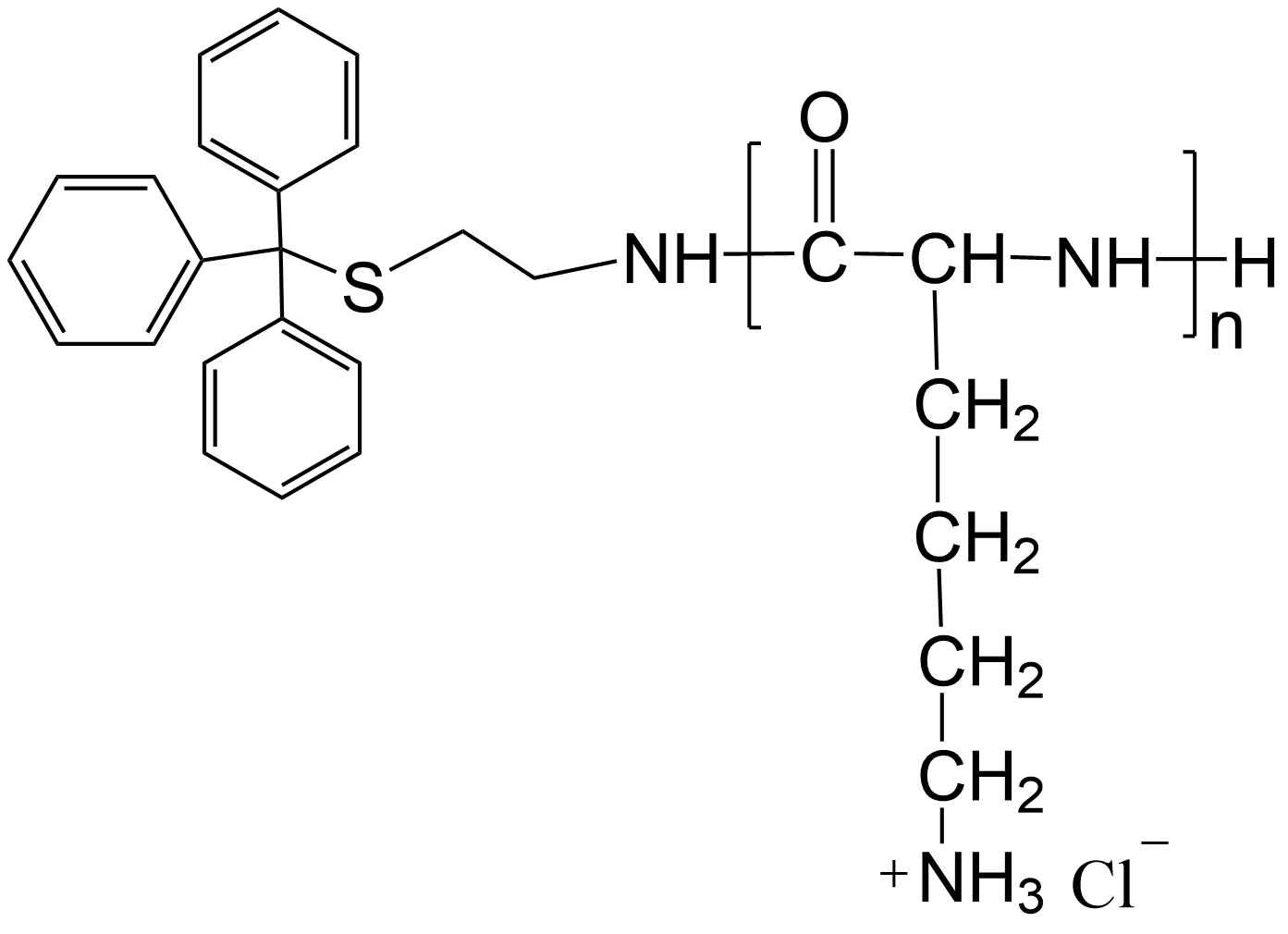
Description
General Description
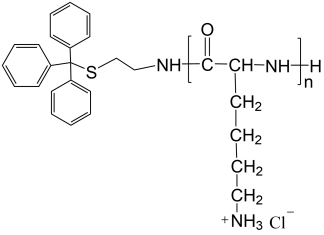
PLL-PEG-Tritylthiol is a biodegradable block copolymer designed for the preparation of thiol-functional biomaterials and nanocarriers. The polymer combines the cationic properties of poly(L-lysine) with the hydrophilicity and biocompatibility of PEG, while the terminal trityl-protected thiol provides a stable, protected reactive handle for downstream functionalization.
Following deprotection, the free thiol readily participates in thiol-maleimide conjugation, thiol-ene click chemistry, disulfide bond formation, Michael addition, and gold surface immobilization. The poly(L-lysine) segment contains multiple primary amine groups that enable electrostatic interaction with nucleic acids and can also be chemically modified using NHS esters, activated carboxylic acids, aldehydes, and other amine-reactive reagents.
PLL-PEG-Tritylthiol is widely employed in gene delivery, polymer-drug conjugates, hydrogel preparation, nanoparticle surface engineering, biosensors, tissue engineering, and advanced biomaterials research.
Applications
- Gene delivery
- Nucleic acid delivery
- Thiol-functional polymer synthesis
- Nanoparticle functionalization
- Hydrogel synthesis
- Surface modification
- Drug conjugation
- Gold nanoparticle functionalization
- Tissue engineering
- Biomaterials research
Features and Benefits
- Block copolymer architecture
- Terminal trityl-protected thiol
- Easily deprotected to free thiol
- Multiple primary amines on PLL
- Excellent water solubility
- Excellent biocompatibility
- Suitable for post-polymer functionalization
- Available in various PLL lengths and PEG molecular weights