
Description
General Description
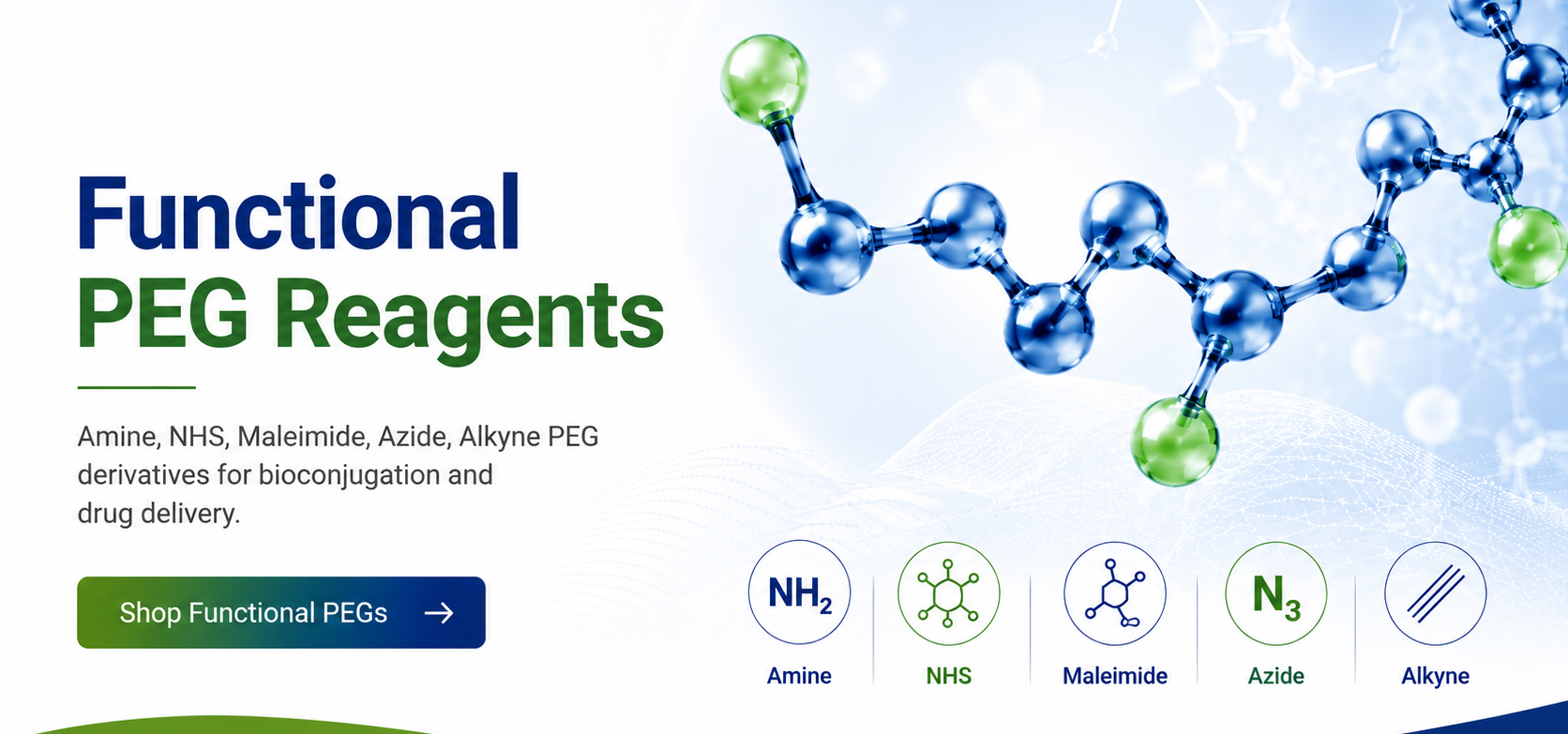
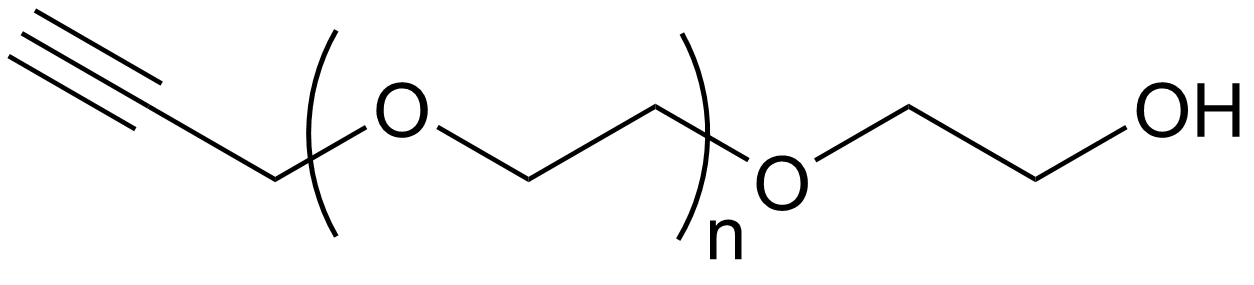
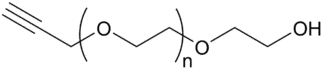
Alkyne-PEG-Hydroxyl (Alkyne-PEG-OH) is a heterobifunctional polyethylene glycol derivative containing a terminal alkyne group and a hydroxyl group at opposite ends of a PEG chain.
The terminal alkyne group reacts with azide (N₃)-functionalized molecules through copper(I)-catalyzed azide-alkyne cycloaddition (CuAAC), forming stable triazole linkages.
The hydroxyl group provides an additional functional handle for chemical modification, including esterification, carbonate formation, and polymerization initiation under suitable conditions.
Because the two terminal groups have different chemical reactivities, Alkyne-PEG-OH can serve as a versatile heterobifunctional linker for connecting molecules, synthesizing functional polymers, and preparing PEG-based conjugates.
NSP offers Alkyne-PEG-OH with different PEG molecular weights for click chemistry, bioconjugation, polymer synthesis, and surface modification.
Applications
- CuAAC click chemistry
- Bioconjugation
- Polymer synthesis
- PEG linker synthesis
- Protein and peptide modification
- Drug conjugation
- Surface functionalization
- Nanoparticle modification
- Biomolecule immobilization
- Ring-opening polymerization initiation
- Synthesis of functional PEG derivatives
Features and Benefits
- Terminal alkyne (ALK) functionality
- Terminal hydroxyl (OH) group
- Heterobifunctional PEG linker
- Compatible with CuAAC click chemistry
- Reacts with azide-functionalized molecules
- Hydroxyl group available for further modification
- Hydrophilic and flexible PEG spacer
- Suitable for polymer synthesis
- Useful for bioconjugation and surface modification
- Multiple PEG molecular weights available
- Custom molecular weights available

Reviews
There are no reviews yet.