
Description
General Description
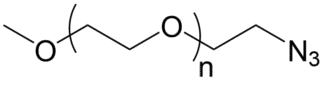
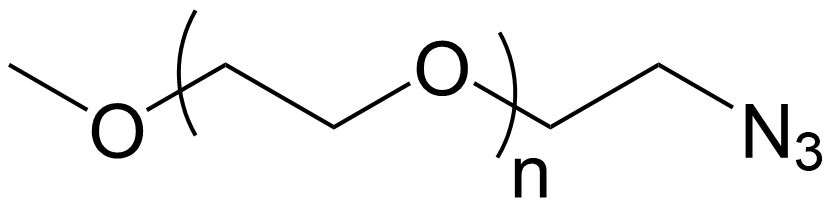
mPEG-Azide (mPEG-N₃) is a versatile monofunctional PEG reagent designed for bioorthogonal conjugation and PEGylation applications. The terminal methoxy group is chemically inert, preventing polymer crosslinking, while the terminal azide group serves as a highly selective reactive handle for click chemistry.
The azide group readily participates in copper-catalyzed azide-alkyne cycloaddition (CuAAC) with terminal alkynes and strain-promoted azide-alkyne cycloaddition (SPAAC) with strained alkynes such as DBCO and BCN, producing stable triazole linkages under mild conditions. These reactions enable efficient conjugation with proteins, peptides, antibodies, nucleic acids, nanoparticles, polymers, fluorescent dyes, and targeting ligands.
The PEG spacer enhances aqueous solubility, improves biocompatibility, reduces nonspecific protein adsorption, and prolongs circulation time in vivo. mPEG-N₃ is widely employed in protein PEGylation, click chemistry, nanoparticle surface modification, molecular imaging, drug delivery systems, and biomedical research.
Applications
- Click chemistry (CuAAC)
- Copper-free click chemistry (SPAAC)
- Protein PEGylation
- Peptide conjugation
- Antibody modification
- Drug conjugation
- Nanoparticle functionalization
- Surface modification
- Molecular imaging
- Biomaterials research
Features and Benefits
- Monofunctional PEG reagent
- Terminal azide functionality
- Compatible with CuAAC and SPAAC chemistry
- Highly selective bioorthogonal conjugation
- Excellent water solubility
- Excellent biocompatibility
- Reduces nonspecific protein adsorption
- Available in multiple PEG molecular weights