
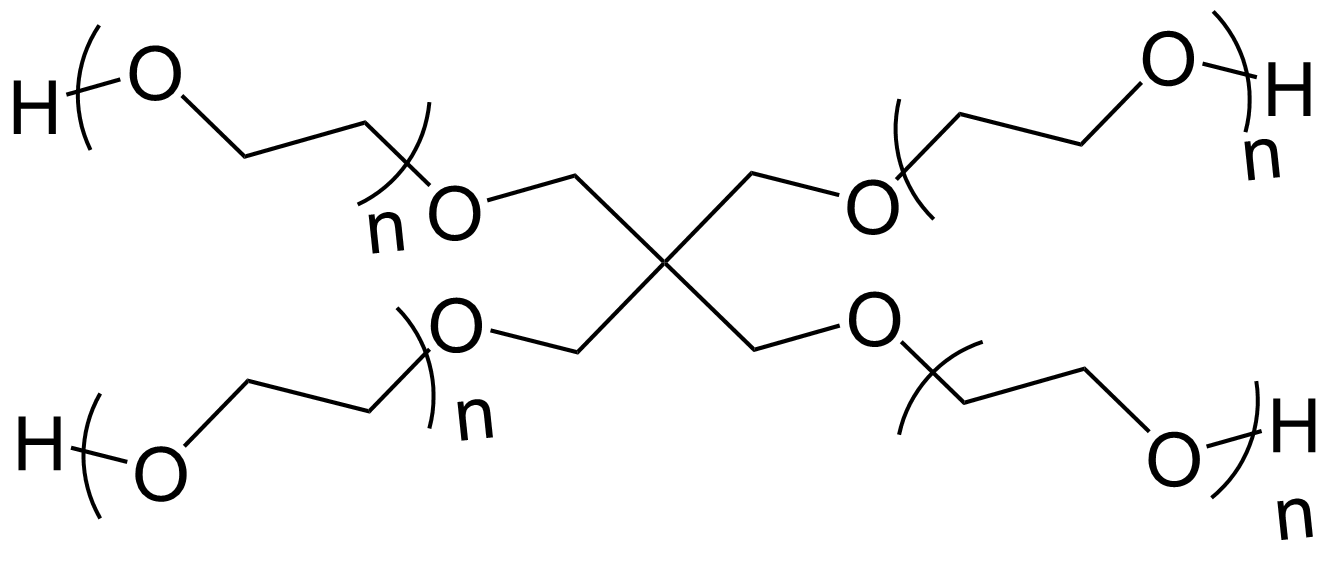
Description
General Description
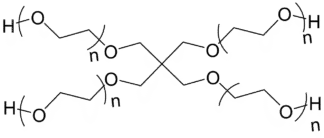
4-arm PEG-OH is a branched PEG derivative designed for applications requiring multiple hydroxyl functional groups. Compared with linear PEG derivatives, the four-arm architecture provides higher functional group density, enhanced crosslinking capability, and increased loading capacity for polymer synthesis and biomaterial fabrication.
The terminal hydroxyl groups can initiate ring-opening polymerization of lactide, glycolide, caprolactone, trimethylene carbonate, and related cyclic monomers, enabling synthesis of multi-arm PLA, PLGA, PCL, and other biodegradable copolymers. The PEG backbone provides excellent water solubility, flexibility, biocompatibility, and low protein adsorption.
4-arm PEG-OH is widely used in hydrogel preparation, tissue engineering scaffolds, drug delivery systems, regenerative medicine, and advanced biomaterials development.
Applications
- Hydrogel synthesis
- Tissue engineering
- Drug delivery systems
- Regenerative medicine
- Multi-arm PLGA synthesis
- Multi-arm PLA synthesis
- Multi-arm PCL synthesis
- Polymer synthesis
- Biomaterials engineering
- Biomedical research
Features and Benefits
- Four terminal hydroxyl groups
- Multi-arm PEG architecture
- High functional group density
- Excellent water solubility
- Versatile polymerization initiator
- Excellent biocompatibility
- Reduced protein adsorption
- Suitable for hydrogel formation
- Available in multiple molecular weights