
Description
General Description
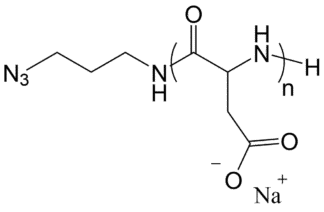
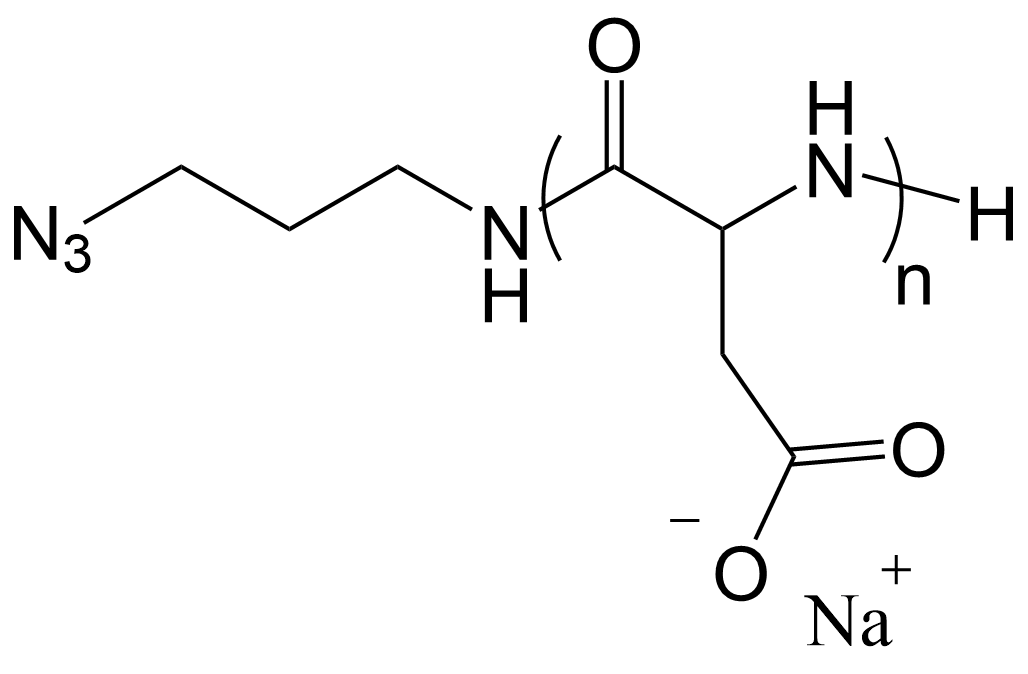
Azide-Poly(L-Aspartic Acid) Sodium Salt [N₃-Poly(L-Asp)] is a functional, water-soluble polypeptide based on poly(L-aspartic acid) and supplied in its sodium salt form. The polymer contains multiple carboxylate groups along the polypeptide backbone and a terminal azide (N₃) functional group.
The terminal azide provides a versatile bioorthogonal conjugation site. It reacts with terminal alkynes through copper-catalyzed azide-alkyne cycloaddition (CuAAC) and with strained cyclooctynes such as DBCO and BCN through strain-promoted azide-alkyne cycloaddition (SPAAC). SPAAC enables efficient copper-free click chemistry and is particularly useful for biological and biomaterials applications.
The poly(L-aspartic acid) segment contains numerous pendant carboxylate groups, providing water solubility and additional sites for chemical modification. These carboxyl groups can be activated for conjugation with amine-containing drugs, peptides, proteins, dyes, targeting ligands, and other functional molecules.
N₃-Poly(L-Asp) provides a versatile platform for preparing functional polypeptide conjugates, drug-polymer conjugates, nanoparticles, hydrogels, and other advanced biomaterials.
Applications
- CuAAC click chemistry
- SPAAC copper-free click chemistry
- DBCO-azide conjugation
- Protein and peptide conjugation
- Drug-polymer conjugates
- Nanoparticle functionalization
- Hydrogel preparation
- Surface modification
- Targeted drug delivery
- Biomaterials research
Features and Benefits
- Terminal azide (N₃) functionality
- Water-soluble polypeptide
- Multiple pendant carboxylate groups
- Compatible with CuAAC click chemistry
- Compatible with copper-free SPAAC chemistry
- Reactive with DBCO and BCN derivatives
- Biodegradable polypeptide backbone
- Suitable for additional carboxyl-group modification
- Custom molecular weights available