

Description
General Description
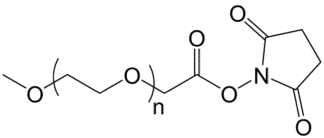
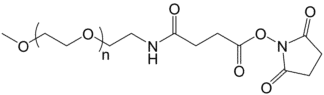
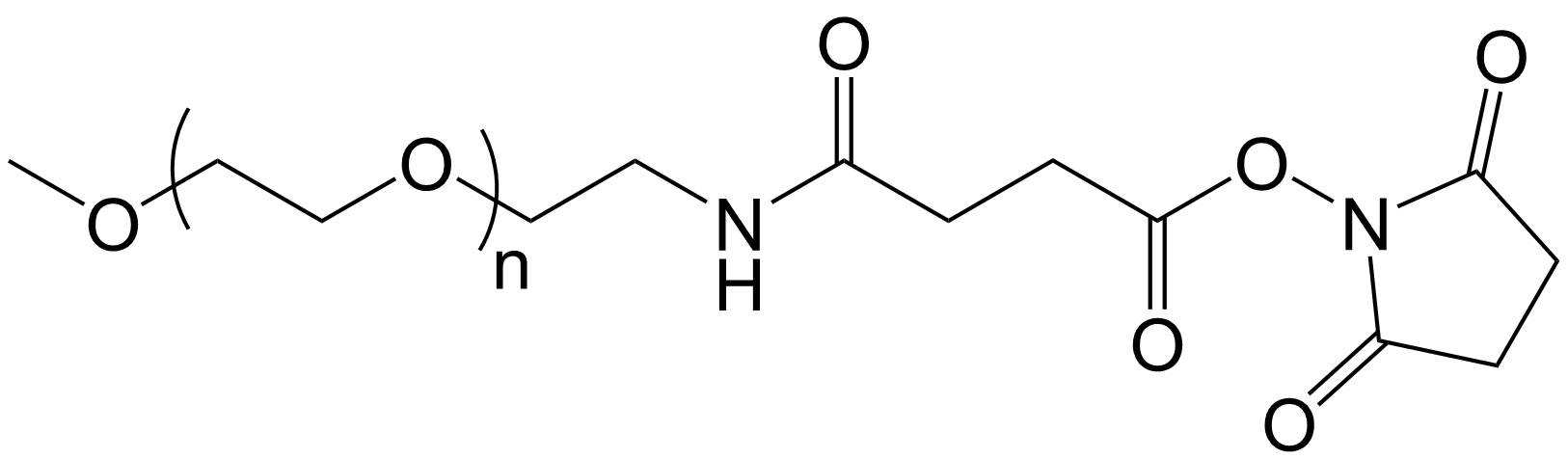
mPEG-Glutaric Acid NHS Ester (mPEG-GAS) is a highly reactive monofunctional PEG reagent designed for efficient amine-selective conjugation. The terminal methoxy group is chemically inert, preventing polymer crosslinking, while the activated NHS ester provides rapid coupling with primary amines on proteins, peptides, antibodies, enzymes, nanoparticles, and other biomolecules.
The glutaric acid spacer introduces additional flexibility between the PEG chain and the conjugated molecule, helping reduce steric hindrance and often improving coupling efficiency compared with shorter linkers. NHS ester conjugation proceeds efficiently under mild aqueous conditions (typically pH 7.2–8.5), producing stable amide bonds.
The PEG spacer improves aqueous solubility, enhances biocompatibility, reduces nonspecific protein adsorption, and prolongs circulation time in vivo. mPEG-GAS is widely used for therapeutic protein PEGylation, antibody modification, nanoparticle surface engineering, hydrogel synthesis, and advanced biomedical research.
Applications
- Protein PEGylation
- Peptide conjugation
- Antibody modification
- Enzyme modification
- Drug conjugation
- Nanoparticle functionalization
- Surface modification
- Hydrogel synthesis
- Drug delivery systems
- Biomaterials research
Features and Benefits
- Monofunctional PEG reagent
- Activated NHS ester functionality
- Rapid amine-selective conjugation
- Stable amide bond formation
- Flexible glutaric acid spacer
- Excellent water solubility
- Excellent biocompatibility
- Available in multiple PEG molecular weights