
Description
General Description
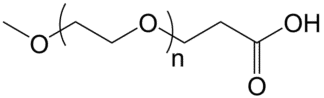
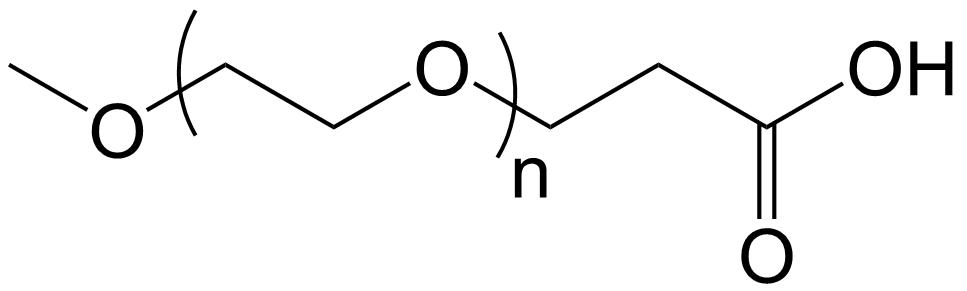
mPEG-Propionic Acid (mPEG-PA) is a versatile monofunctional PEG reagent designed for selective bioconjugation and PEGylation applications. The terminal methoxy group is chemically inert, preventing polymer crosslinking, while the terminal propionic acid provides a reactive carboxylic acid functionality connected to the PEG chain through a three-carbon linker.
The carboxyl group can be activated using carbodiimide chemistry (EDC/NHS) or other peptide-coupling reagents to efficiently react with proteins, peptides, antibodies, amine-containing drugs, nanoparticles, and polymers, forming stable amide bonds. The propionic acid spacer offers greater flexibility than acetic acid while maintaining excellent coupling efficiency and minimizing steric hindrance.
The PEG spacer enhances aqueous solubility, improves biocompatibility, reduces nonspecific protein adsorption, and prolongs circulation time in vivo. mPEG-Propionic Acid is widely employed in protein PEGylation, polymer-drug conjugates, hydrogel synthesis, nanoparticle surface modification, and advanced biomedical research.
Applications
- Protein PEGylation
- Peptide conjugation
- Antibody modification
- Drug conjugation
- Nanoparticle functionalization
- Surface modification
- Hydrogel synthesis
- Polymer synthesis
- Drug delivery systems
- Biomaterials research
Features and Benefits
- Monofunctional PEG reagent
- Terminal propionic acid functionality
- Reactive carboxylic acid group
- Compatible with EDC/NHS coupling
- Flexible three-carbon spacer
- Excellent water solubility
- Excellent biocompatibility
- Available in multiple PEG molecular weights