
Description
General Description
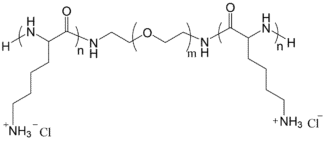
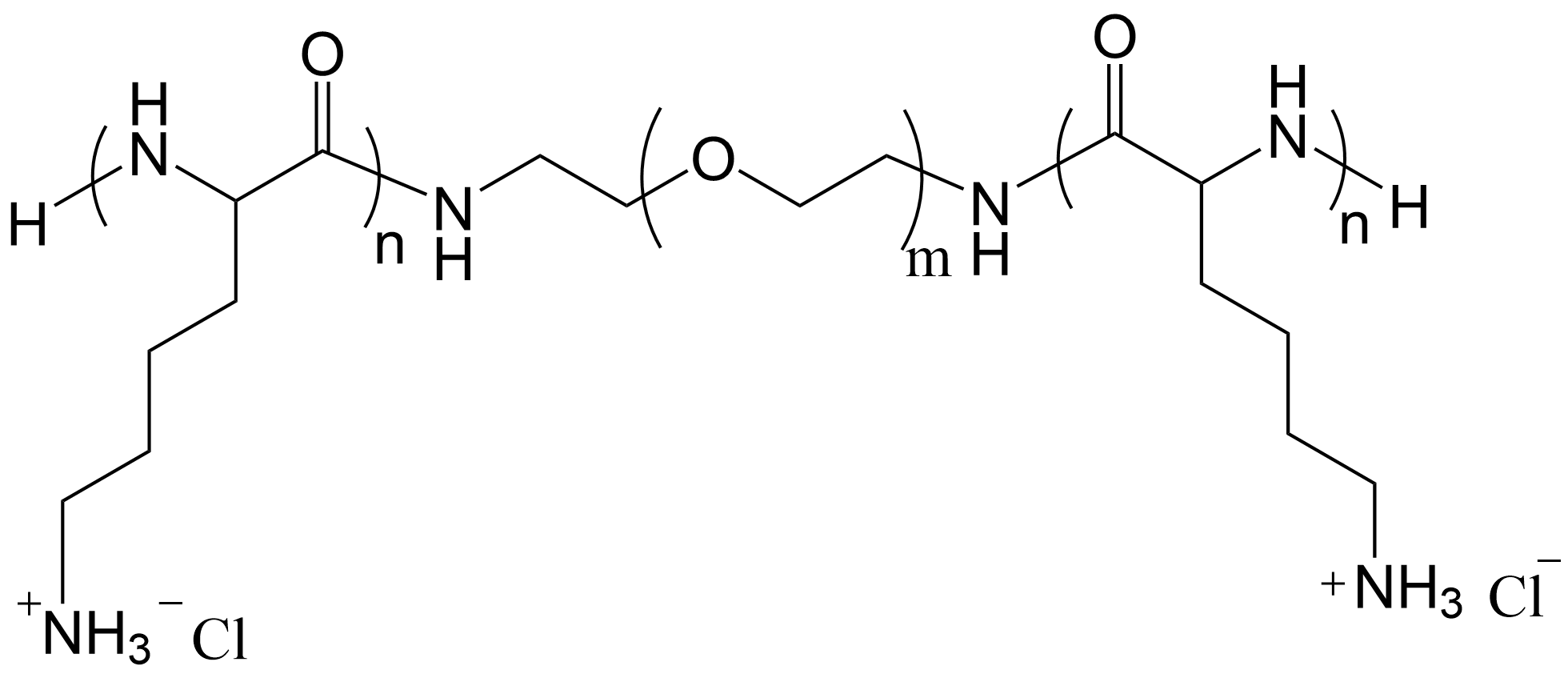
Poly(L-lysine)-PEG-Poly(L-lysine) (PLL-PEG-PLL) is a multifunctional amphiphilic triblock copolymer designed for nucleic acid delivery and advanced biomaterial applications. The central PEG block provides excellent hydrophilicity, steric stabilization, and reduced nonspecific protein adsorption, whereas the two poly(L-lysine) blocks contain multiple primary amine groups that readily complex with negatively charged biomolecules.
The positively charged PLL segments efficiently condense DNA, mRNA, siRNA, plasmids, oligonucleotides, and CRISPR components through electrostatic interactions, facilitating the formation of stable polyplexes and nanoparticles. The PEG spacer enhances particle stability, prolongs blood circulation, reduces aggregation, and improves biocompatibility.
PLL-PEG-PLL is extensively used in non-viral gene delivery, nucleic acid therapeutics, vaccine development, polymeric nanoparticle engineering, hydrogel preparation, tissue engineering, and regenerative medicine.
Applications
- DNA delivery
- mRNA delivery
- siRNA delivery
- CRISPR delivery
- Gene therapy research
- Polyplex formation
- Polymeric nanoparticle preparation
- Tissue engineering
- Hydrogel synthesis
- Biomaterials research
Features and Benefits
- ABA triblock copolymer architecture
- Biodegradable poly(L-lysine) segments
- Hydrophilic PEG spacer
- Multiple primary amine groups
- Efficient nucleic acid condensation
- Excellent water solubility
- Improved nanoparticle stability
- Available in various PEG and PLL molecular weights