


Description
General Description
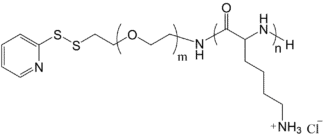
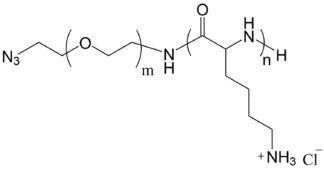
Poly(L-Ornithine)-MPEG is an amphiphilic block copolymer that combines the cationic properties of poly(L-ornithine) with the hydrophilic and stealth characteristics of polyethylene glycol. Poly(L-ornithine) contains pendant primary amine groups capable of interacting with negatively charged nucleic acids, proteins, cell membranes, and biomolecules, making it useful for delivery and surface modification applications.
The mPEG segment enhances aqueous solubility, reduces nonspecific interactions, improves colloidal stability, and increases biocompatibility. Poly(L-Ornithine)-MPEG is frequently utilized for gene delivery systems, nucleic acid complexation, nanoparticle formulation, tissue engineering, and advanced biomaterials development.
Applications
- Gene delivery
- DNA delivery
- mRNA delivery
- siRNA delivery
- Nucleic acid complexation
- Nanoparticle formulation
- Drug delivery systems
- Surface modification
- Tissue engineering
- Biomaterials research
Features and Benefits
-
- Cationic poly(L-ornithine) segment
- Hydrophilic mPEG segment
- Excellent water solubility
- Multiple primary amine functionalities
- Efficient nucleic acid binding
- Improved biocompatibility
- Enhanced colloidal stability
- Reduced nonspecific interactions
- Suitable for drug and gene delivery applications

Reviews
There are no reviews yet.