
Description
General Description
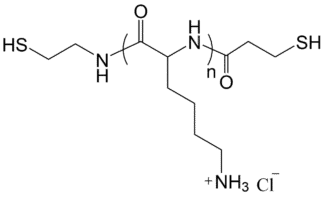
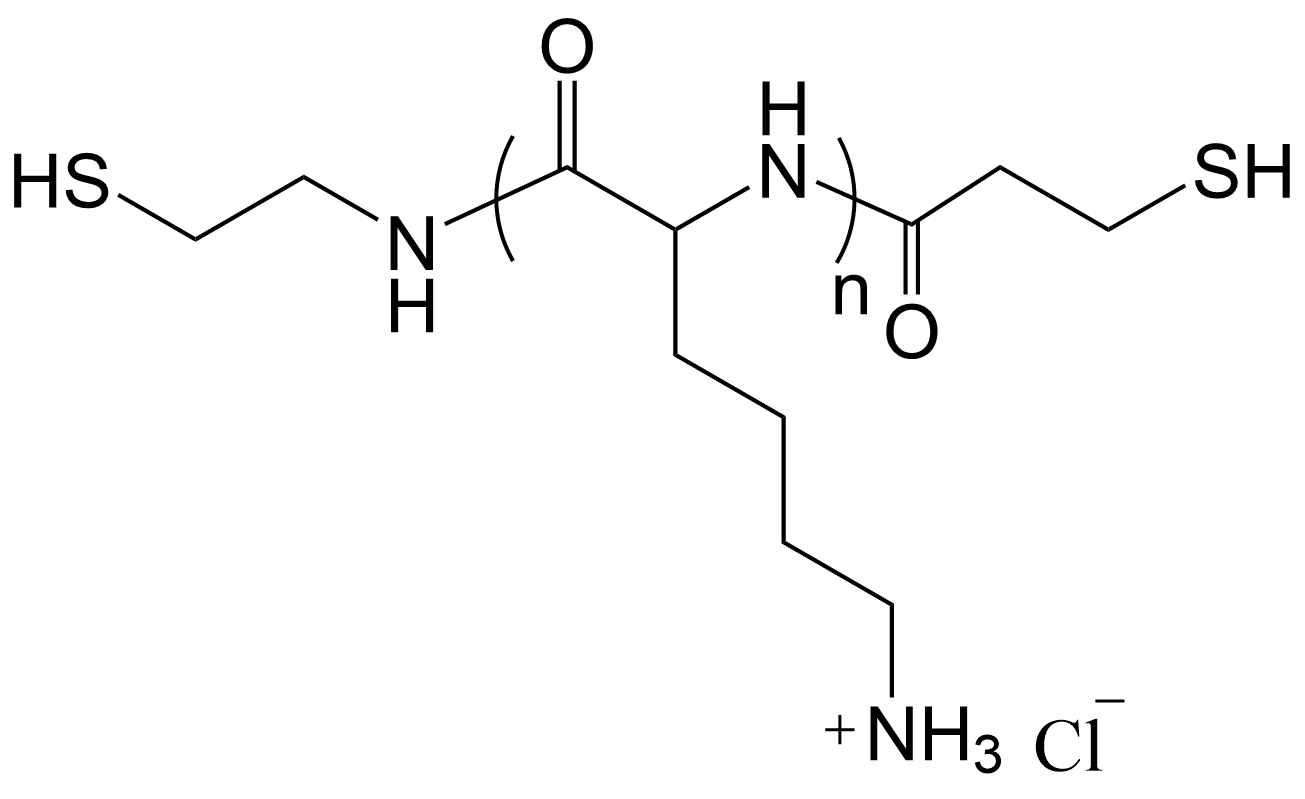
Thiol-Poly(L-lysine)-Thiol (HS-PLL-SH) is a functional polycation designed for advanced biomaterials and bioconjugation applications. The poly(L-lysine) backbone contains abundant ε-amino groups that readily interact with DNA, RNA, proteins, polysaccharides, and cell membranes through electrostatic interactions, making it an excellent material for nucleic acid delivery and surface modification.
Terminal thiol groups provide versatile reactive handles for conjugation with maleimides, vinyl sulfones, acrylates, norbornenes, activated disulfides, and gold surfaces. These reactions proceed under mild conditions to form stable covalent linkages, enabling the preparation of hydrogels, polymer networks, nanoparticles, and multifunctional biomaterials.
Thiol-Poly(L-lysine)-Thiol combines the excellent biocompatibility and biodegradability of poly(L-lysine) with the versatility of thiol chemistry, making it suitable for drug delivery, tissue engineering, cell encapsulation, biosensors, and regenerative medicine.
Applications
- Gene delivery
- DNA and RNA complexation
- Hydrogel synthesis
- Thiol-maleimide conjugation
- Thiol-ene click chemistry
- Surface modification
- Nanoparticle functionalization
- Tissue engineering
- Drug delivery systems
- Biomaterials research