
Description
General Description
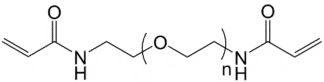
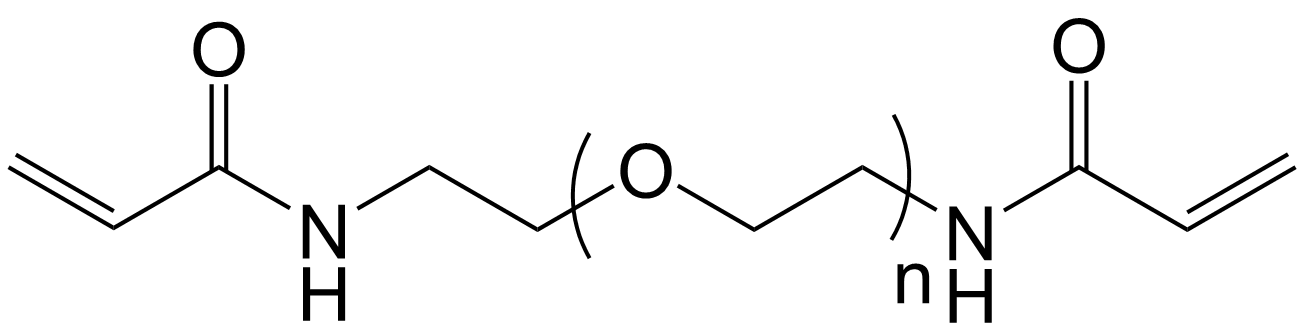
Acrylamide-PEG-Acrylamide (ACA-PEG-ACA) is a bifunctional PEG crosslinker designed for the fabrication of hydrophilic polymer networks and biocompatible hydrogels. The central PEG spacer provides excellent water solubility, flexibility, and biocompatibility, while the terminal acrylamide groups participate in radical polymerization or thiol-Michael addition to form stable three-dimensional polymer networks.
ACA-PEG-ACA is widely used to prepare PEG-based hydrogels with tunable mechanical properties, swelling behavior, and degradation profiles. These hydrogels are extensively employed in drug delivery, cell encapsulation, tissue engineering, bioinks for 3D bioprinting, biosensors, wound healing, and regenerative medicine.
Compared with conventional small-molecule crosslinkers, ACA-PEG-ACA offers improved flexibility, reduced cytotoxicity, and enhanced control over network architecture, making it a preferred material for biomedical and pharmaceutical applications.
Applications
- PEG hydrogel synthesis
- Hydrogel crosslinking
- Tissue engineering
- Regenerative medicine
- Cell encapsulation
- Drug delivery systems
- Bioinks for 3D bioprinting
- Surface modification
- Biosensors
- Biomaterials research
Features and Benefits
- Difunctional PEG crosslinker
- Terminal acrylamide groups
- Excellent water solubility
- Highly biocompatible PEG backbone
- Efficient free-radical polymerization
- Compatible with thiol-Michael addition chemistry
- Low cytotoxicity
- Research-grade quality