
Description
General Description
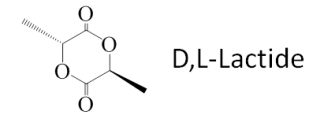
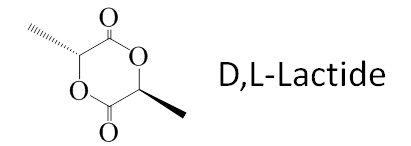
DL-Lactide is a high-purity cyclic diester composed of equal amounts of D-lactide and L-lactide. It serves as a key monomer for the synthesis of poly(D,L-lactic acid) (PDLLA) through ring-opening polymerization (ROP). Unlike the highly crystalline polymers produced from optically pure D- or L-lactide, PDLLA prepared from D,L-Lactide is generally amorphous, exhibiting faster hydrolytic degradation and excellent drug release characteristics.
Polymerization can be carried out using stannous octoate (Sn(Oct)₂), organocatalysts, or other ROP catalysts to obtain polymers with controlled molecular weights and narrow molecular weight distributions. The resulting PDLLA possesses excellent biocompatibility and biodegradability, making it one of the most widely used polymers in pharmaceutical formulations and biomedical applications.
D,L-Lactide is extensively employed in the preparation of biodegradable nanoparticles, microspheres, implants, tissue engineering scaffolds, resorbable medical devices, and controlled-release drug delivery systems.
Applications
- Ring-opening polymerization (ROP)
- Poly(D,L-lactic acid) (PDLLA) synthesis
- Drug delivery systems
- Biodegradable nanoparticles
- Microsphere preparation
- Tissue engineering
- Resorbable medical devices
- Controlled-release formulations
- Biodegradable polymers
- Polymer research
Features and Benefits
- High-purity cyclic ester monomer
- Racemic lactide composition
- Produces amorphous PDLLA
- Excellent biodegradability
- Excellent biocompatibility
- Controlled polymer molecular weight
- Compatible with various ROP catalysts
- Research and industrial grade available