


Description
General Description
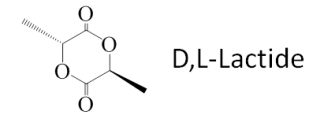
L-Lactide is a high-purity cyclic diester derived from two molecules of L-lactic acid. It serves as a key monomer for the controlled synthesis of poly(L-lactic acid) (PLLA) through ring-opening polymerization (ROP). PLLA is a biodegradable, bioresorbable polyester recognized for its excellent mechanical properties, high crystallinity, and favorable biocompatibility.
Polymerization of L-Lactide can be initiated using catalysts such as stannous octoate (Sn(Oct)₂), zinc-based catalysts, or organocatalysts to produce polymers with controlled molecular weights and narrow molecular weight distributions. PLLA is widely employed in absorbable sutures, orthopedic fixation devices, tissue engineering scaffolds, drug delivery systems, biodegradable packaging, and 3D printing.
PLLA can also be blended with poly(D-lactic acid) (PDLA) to form stereocomplex PLA, which exhibits significantly enhanced thermal stability, crystallinity, and mechanical performance compared with either homopolymer alone.
Applications
- Ring-opening polymerization (ROP)
- Poly(L-lactic acid) (PLLA) synthesis
- Stereocomplex PLA preparation
- Drug delivery systems
- Tissue engineering
- Biodegradable medical devices
- Absorbable sutures
- 3D printing materials
- Biodegradable plastics
- Polymer research
Features and Benefits
- High optical purity
- High-purity cyclic ester monomer
- Efficient ring-opening polymerization
- Produces highly crystalline PLLA
- Excellent biodegradability
- Excellent biocompatibility
- Compatible with various ROP catalysts
- Research and industrial grade available