
Description
General Description
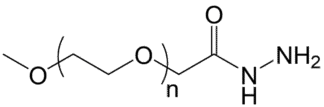
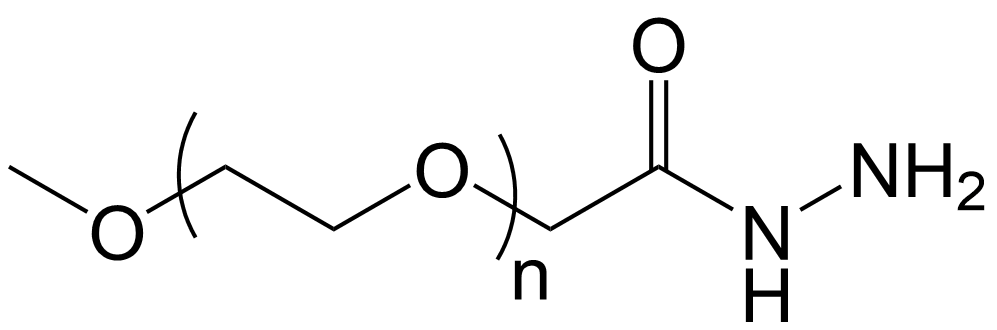
mPEG-Hydrazide (mPEG-HZ) is a versatile monofunctional PEG reagent designed for selective bioconjugation and PEGylation applications. The terminal methoxy group is chemically inert, preventing polymer crosslinking, while the terminal hydrazide group provides a highly reactive functionality for coupling with carbonyl-containing compounds.
The hydrazide group reacts efficiently with aldehydes and ketones under mild aqueous conditions to form hydrazone bonds. These reactions are widely employed for site-specific conjugation of oxidized glycoproteins, carbohydrates, polysaccharides, antibodies, proteins, nanoparticles, and drug molecules. Hydrazone linkages can also serve as pH-sensitive bonds for controlled drug release in drug delivery systems.
The PEG spacer improves aqueous solubility, enhances biocompatibility, reduces nonspecific protein adsorption, and prolongs circulation time in vivo. mPEG-HZ is widely used in protein PEGylation, antibody conjugation, hydrogel synthesis, nanoparticle surface modification, targeted drug delivery, and biomedical research.
Applications
- Protein PEGylation
- Antibody conjugation
- Glycoprotein labeling
- Carbohydrate conjugation
- Drug conjugation
- pH-sensitive drug delivery
- Nanoparticle functionalization
- Hydrogel synthesis
- Surface modification
- Biomaterials research
Features and Benefits
- Monofunctional PEG reagent
- Terminal hydrazide functionality
- Forms hydrazone linkages
- Compatible with aldehyde and ketone conjugation
- Excellent water solubility
- Excellent biocompatibility
- Reduces nonspecific protein adsorption
- Available in multiple PEG molecular weights