
Description
General Description
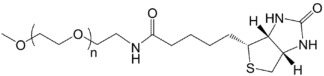
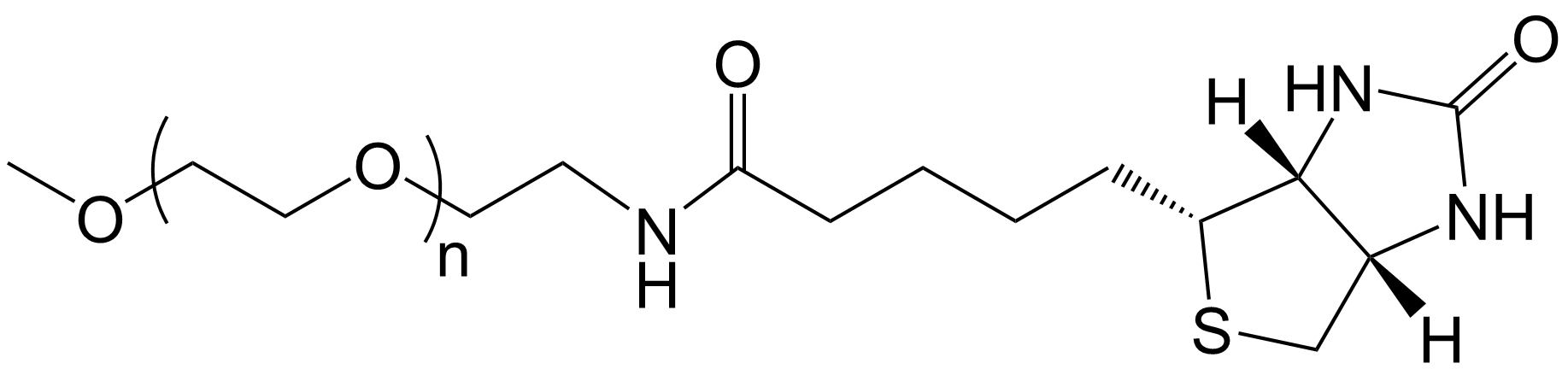
mPEG-Biotin is a versatile monofunctional PEG reagent designed for affinity-based bioconjugation and PEGylation applications. The terminal methoxy group is chemically inert, preventing polymer crosslinking, while the terminal biotin group provides a highly specific binding site for streptavidin and avidin.
The biotin moiety exhibits an exceptionally high binding affinity for streptavidin and avidin (Kd ≈ 10⁻¹⁵ M), making it ideal for affinity purification, molecular immobilization, targeted delivery, biosensors, and diagnostic assays. The PEG spacer enhances aqueous solubility, improves biocompatibility, reduces steric hindrance, and minimizes nonspecific protein adsorption.
mPEG-Biotin is widely employed for protein and peptide labeling, nanoparticle surface modification, liposome functionalization, molecular imaging, biosensor fabrication, and advanced biomedical research.
Applications
- Protein labeling
- Peptide conjugation
- Streptavidin-mediated immobilization
- Affinity purification
- Nanoparticle functionalization
- Liposome modification
- Surface modification
- Biosensor development
- Molecular imaging
- Biomaterials research
Features and Benefits
- Monofunctional PEG reagent
- Terminal biotin functionality
- High-affinity streptavidin/avidin binding
- Excellent water solubility
- Excellent biocompatibility
- Reduces nonspecific protein adsorption
- Flexible PEG spacer
- Available in multiple PEG molecular weights