
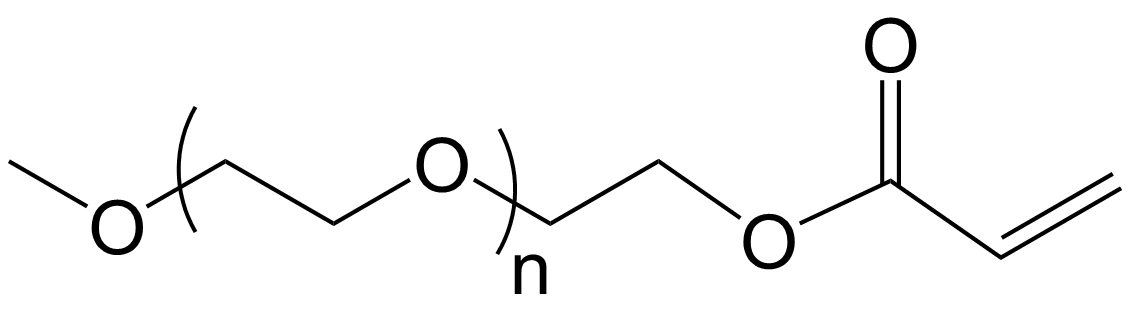
Description
General Description
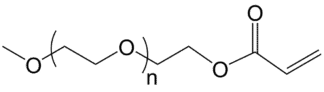
mPEG-Acrylate (mPEG-ACRL) is a versatile monofunctional PEG reagent designed for polymer synthesis and bioconjugation. The terminal methoxy group is chemically inert, preventing polymer crosslinking, while the terminal acrylate group serves as a highly reactive vinyl functionality for free-radical polymerization, photopolymerization, and thiol-Michael addition reactions.
The acrylate group readily reacts with thiol-containing molecules under mild conditions to form stable thioether bonds and can be copolymerized with acrylic monomers to prepare PEG-based hydrogels, coatings, and functional polymer networks. The PEG spacer improves water solubility, biocompatibility, flexibility, and reduces nonspecific protein adsorption.
mPEG-ACRL is widely used in PEG hydrogel fabrication, tissue engineering, surface modification, drug delivery systems, polymer synthesis, and biomedical materials research.
Applications
- Hydrogel synthesis
- Photopolymerization
- Free-radical polymerization
- Thiol-Michael addition
- Polymer modification
- Surface functionalization
- Drug delivery systems
- Tissue engineering
- Biomedical coatings
- Biomaterials research
Features and Benefits
- Monofunctional PEG reagent
- Reactive acrylate group
- Compatible with radical polymerization
- Compatible with thiol-Michael addition
- Excellent water solubility
- Excellent biocompatibility
- Reduces nonspecific protein adsorption
- Available in multiple PEG molecular weights