
Description
General Description
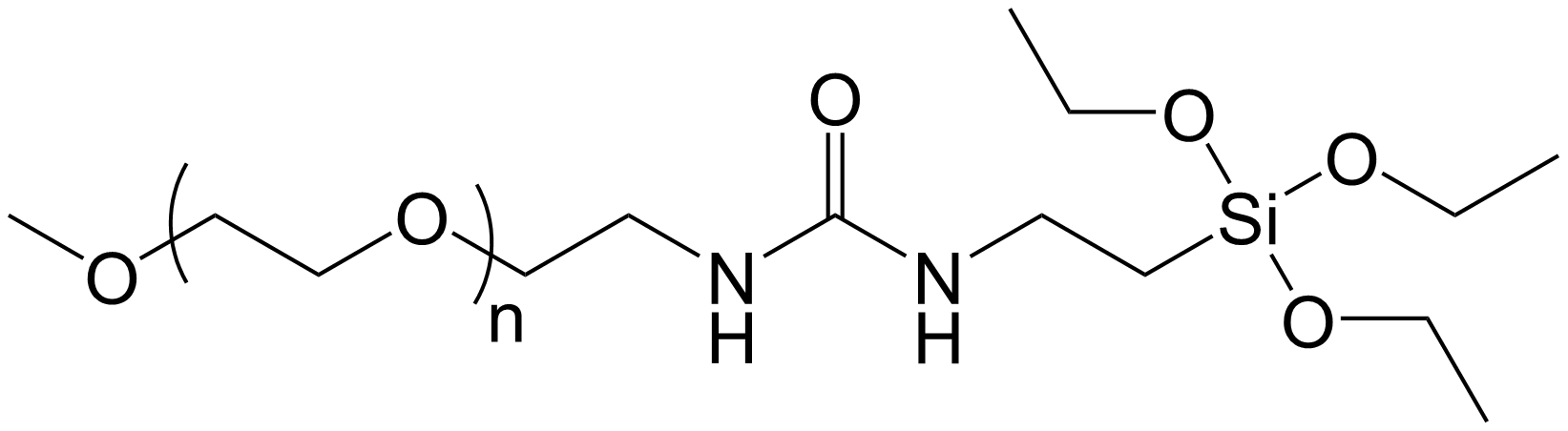
mPEG-Silane is a versatile monofunctional PEG reagent designed for the modification of inorganic and hydroxyl-rich surfaces. The terminal methoxy group is chemically inert, preventing polymer crosslinking, while the trialkoxysilane group undergoes hydrolysis and condensation to form stable siloxane (Si–O–Si) bonds with silica, glass, quartz, silicon wafers, and metal oxide surfaces.
The PEG spacer provides excellent aqueous solubility, increases surface hydrophilicity, minimizes nonspecific adsorption of proteins and cells, and improves the biocompatibility of modified materials. PEGylated surfaces prepared using mPEG-Silane exhibit enhanced antifouling properties and improved stability in biological environments.
mPEG-Silane is widely employed for silica nanoparticle functionalization, glass surface PEGylation, biosensor fabrication, microfluidic device modification, biomedical coatings, chromatography media, and diagnostic applications.
Applications
- Glass surface modification
- Silica nanoparticle functionalization
- Silicon wafer PEGylation
- Biosensor fabrication
- Microfluidic device coating
- Antifouling surface preparation
- Medical device coatings
- Chromatography media modification
- Surface passivation
- Biomaterials research
Features and Benefits
-
- Monofunctional PEG reagent
- Reactive trialkoxysilane functionality
- Forms stable siloxane bonds
- Excellent surface hydrophilicity
- Reduces nonspecific protein adsorption
- Excellent biocompatibility
- Suitable for silica and glass surfaces
- Available in multiple PEG molecular weights