


Description
General Description
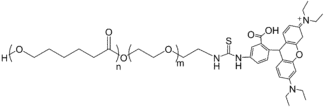
PCL-PEG-NH₂ is a biodegradable amphiphilic block copolymer designed for advanced drug delivery, surface modification, and bioconjugation applications. The hydrophobic poly(ε-caprolactone) (PCL) block enables self-assembly into polymeric micelles and nanoparticles suitable for encapsulating hydrophobic drugs, while the hydrophilic polyethylene glycol (PEG) block improves water solubility, colloidal stability, circulation time, and biocompatibility.
The terminal primary amine (-NH₂) serves as a highly versatile functional group for conjugation with activated esters, carboxylic acids, aldehydes, isothiocyanates, and other reactive molecules. This functionality enables the attachment of targeting ligands, peptides, antibodies, fluorescent dyes, nucleic acids, and imaging agents, facilitating the development of multifunctional nanocarriers and targeted therapeutics.
PCL-PEG-NH₂ is widely employed in nanomedicine, tissue engineering, controlled drug delivery, surface engineering, and biomaterials development.
Applications
- Polymeric micelle preparation
- Nanoparticle fabrication
- Targeted drug delivery
- Surface functionalization
- Bioconjugation
- Peptide conjugation
- Antibody conjugation
- Fluorescent labeling
- Tissue engineering
- Biomaterials research
Features and Benefits
- Amphiphilic PCL-PEG block copolymer
- Terminal primary amine functionality
- Biodegradable PCL segment
- Excellent aqueous dispersibility
- Reactive toward NHS esters and activated carboxylic acids
- Suitable for ligand conjugation
- Excellent biocompatibility
- Research-grade quality