


Description
General Description
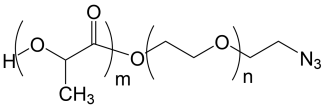
PLLA-PEG-Rhodamine B is a fluorescent biodegradable copolymer designed for imaging-enabled drug delivery and nanomedicine applications. The hydrophobic PLLA block self-assembles into nanoparticle cores capable of encapsulating hydrophobic drugs, while the PEG segment forms a hydrophilic corona that improves colloidal stability, prolongs circulation time, and reduces nonspecific protein adsorption.
The Rhodamine B label provides strong red fluorescence, allowing visualization and quantification of nanoparticles, micelles, and polymer systems using fluorescence microscopy, confocal microscopy, flow cytometry, fluorescence spectroscopy, and in vivo imaging techniques.
PLLA-PEG-RhB is widely employed in nanoparticle tracking, biodistribution studies, cellular uptake investigations, tissue engineering, molecular imaging, and advanced drug delivery research.
Applications
- Nanoparticle tracking
- Cellular uptake studies
- Fluorescence imaging
- Confocal microscopy
- Flow cytometry
- Biodistribution studies
- Drug delivery research
- Polymeric micelle preparation
- Molecular imaging
- Nanomedicine research
Features and Benefits
- Bright red fluorescence
- Biodegradable PLLA segment
- Hydrophilic PEG spacer
- Excellent nanoparticle formation capability
- Suitable for in vitro and in vivo imaging
- Enables nanoparticle tracking
- Supports biodistribution studies
- Excellent biocompatibility
- Available in multiple PLLA and PEG molecular weights