

Description
General Description
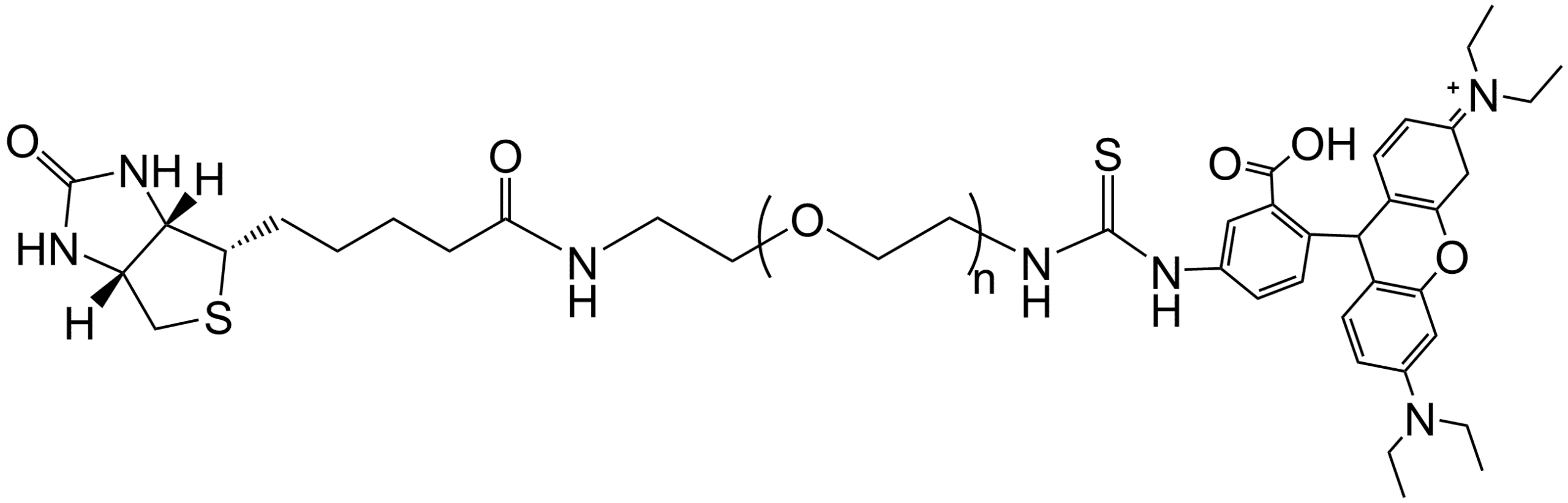
Biotin-PEG-RhB is a multifunctional fluorescent PEG linker designed for affinity-based labeling and imaging applications. The terminal biotin group binds specifically and strongly to streptavidin and avidin, making it ideal for protein immobilization, affinity purification, targeted delivery, and diagnostic assays.
The Rhodamine B fluorophore emits intense red fluorescence, allowing sensitive detection by fluorescence microscopy, confocal microscopy, flow cytometry, fluorescence spectroscopy, and other fluorescence-based analytical techniques. Compared with green fluorophores, RhB offers an alternative emission wavelength for multicolor imaging and reduced background interference in many biological samples.
The hydrophilic PEG spacer improves water solubility, molecular flexibility, and biocompatibility while minimizing steric hindrance and nonspecific protein adsorption. This design preserves the accessibility of both the biotin and RhB groups, making Biotin-PEG-RhB an excellent reagent for fluorescent labeling, nanoparticle functionalization, biosensor fabrication, targeted drug delivery, and molecular imaging.
Applications
- Fluorescent labeling
- Protein labeling
- Streptavidin-based assays
- Antibody labeling
- Molecular imaging
- Flow cytometry
- Confocal microscopy
- Biosensor fabrication
- Nanoparticle functionalization
- Biomedical research
Features and Benefits
- High-affinity biotin functionality
- Bright Rhodamine B fluorescence
- Hydrophilic PEG spacer
- Excellent water solubility
- Reduced steric hindrance
- Low nonspecific protein adsorption
- Excellent biocompatibility
- Suitable for imaging and targeting
- Available in multiple PEG molecular weights