
Description
General Description
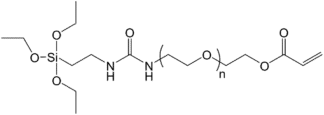
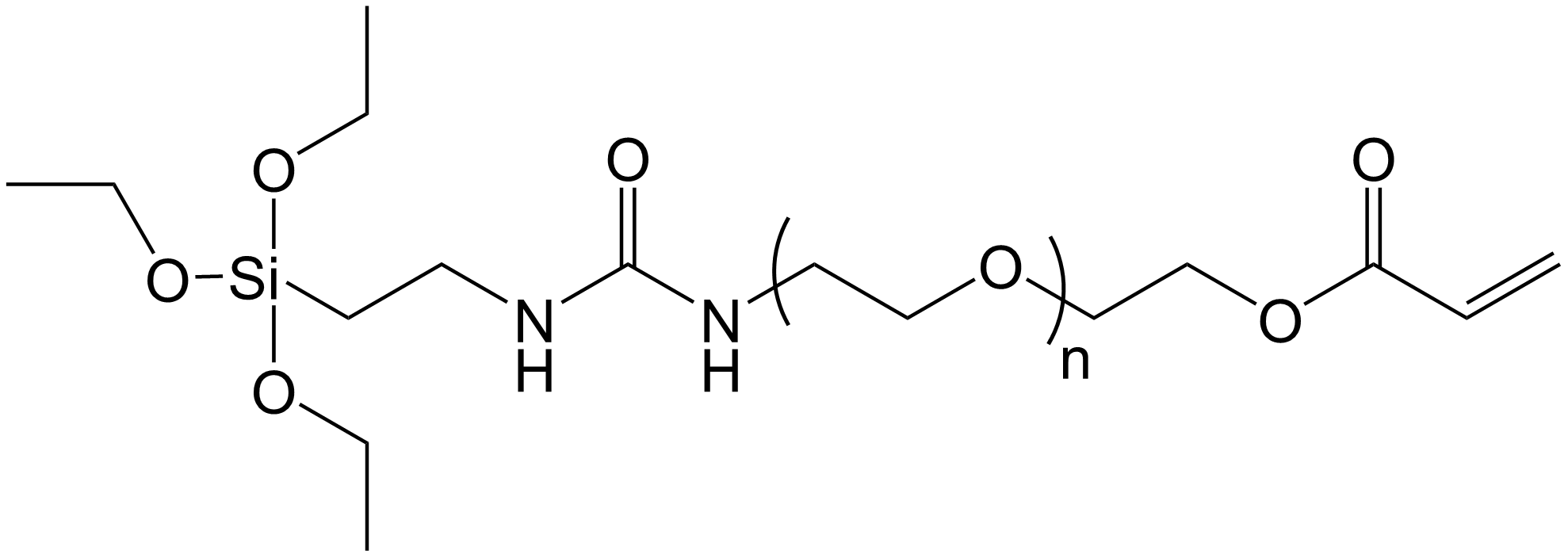
Silane-PEG-Acrylate is a versatile heterobifunctional PEG linker designed for biosurface engineering and polymer network formation. The terminal trialkoxysilane group hydrolyzes to form reactive silanol intermediates that condense with hydroxyl groups present on glass, silica, quartz, silicon wafers, and metal oxide surfaces, producing durable siloxane (Si–O–Si) bonds.
The terminal acrylate group undergoes efficient free-radical polymerization with acrylates and methacrylates and readily reacts with thiol-containing compounds through thiol-Michael addition. These reactions allow the preparation of covalently grafted polymer coatings, PEG hydrogels, microfluidic devices, biosensor interfaces, and tissue engineering scaffolds.
The hydrophilic PEG spacer improves surface hydrophilicity, molecular flexibility, and biocompatibility while minimizing steric hindrance and reducing nonspecific protein adsorption. Silane-PEG-Acrylate is widely employed in hydrogel fabrication, surface PEGylation, microarray preparation, biochip fabrication, cell culture substrates, and advanced biomaterials development.
Applications
- Glass surface functionalization
- Silica nanoparticle modification
- Hydrogel synthesis
- Surface PEGylation
- Polymer grafting
- Microfluidic device fabrication
- Biosensor fabrication
- Biochip preparation
- Tissue engineering
- Biomaterials research
Features and Benefits
- Reactive silane anchoring group
- Reactive acrylate functionality
- Forms stable siloxane bonds on hydroxylated surfaces
- Compatible with free-radical polymerization
- Compatible with thiol-Michael addition
- Excellent water solubility
- Excellent biocompatibility
- Reduces nonspecific protein adsorption
- Available in multiple PEG molecular weights