
Description
General Description
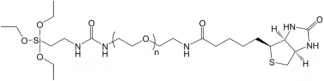
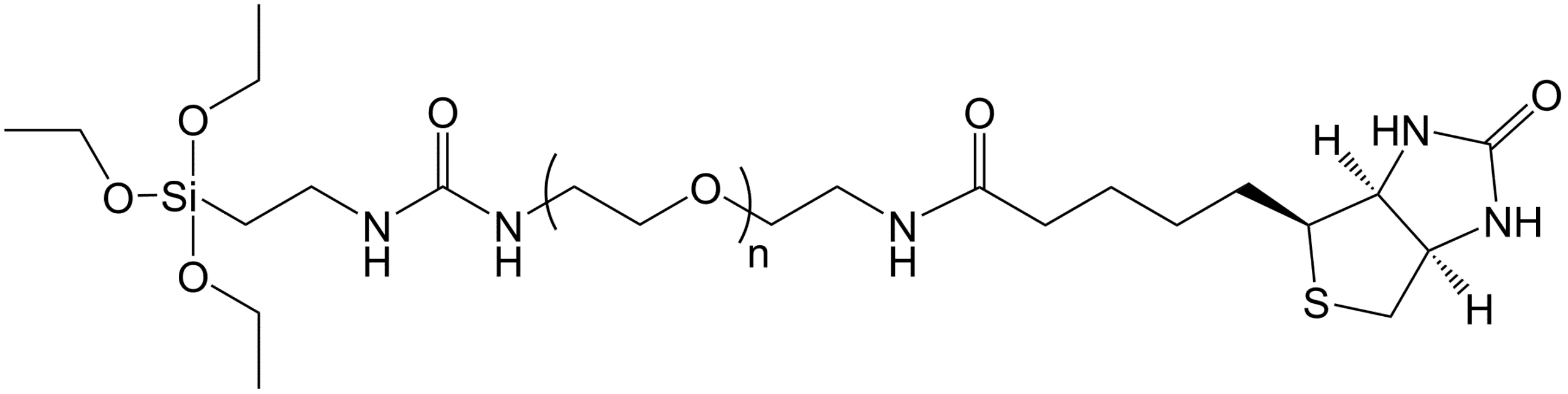
Silane-PEG-Biotin (Silane-PEG-Bio) is a versatile heterobifunctional PEG linker designed for biosurface engineering and affinity-based bioconjugation. The terminal trialkoxysilane group hydrolyzes to form reactive silanol intermediates that condense with hydroxyl groups on glass, silica, quartz, silicon wafers, and metal oxide surfaces, producing stable siloxane (Si–O–Si) bonds.
The terminal biotin group exhibits extremely high affinity for streptavidin and avidin (Kd ≈ 10⁻¹⁵ M), allowing efficient immobilization of biotinylated or streptavidin-functionalized biomolecules for biosensing, diagnostics, affinity purification, and targeted surface assembly.
The hydrophilic PEG spacer improves surface hydrophilicity, molecular flexibility, and biocompatibility while reducing steric hindrance and minimizing nonspecific protein adsorption. Silane-PEG-Biotin is widely employed in biosensor fabrication, protein arrays, diagnostic devices, microfluidic chips, cell culture substrates, molecular imaging, and biomedical surface modification.
Applications
- Glass surface functionalization
- Silica nanoparticle modification
- Biosensor fabrication
- Biochip preparation
- Streptavidin immobilization
- Protein arrays
- Diagnostic assays
- Microfluidic device modification
- Surface PEGylation
- Biomaterials research
Features and Benefits
- Reactive silane anchoring group
- High-affinity biotin functionality
- Strong streptavidin/avidin binding
- Forms stable siloxane bonds on hydroxylated surfaces
- Excellent water solubility
- Excellent biocompatibility
- Reduces nonspecific protein adsorption
- Suitable for biosurface engineering
- Available in multiple PEG molecular weights