
Description
General Description
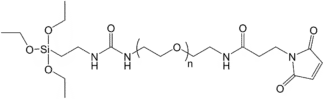
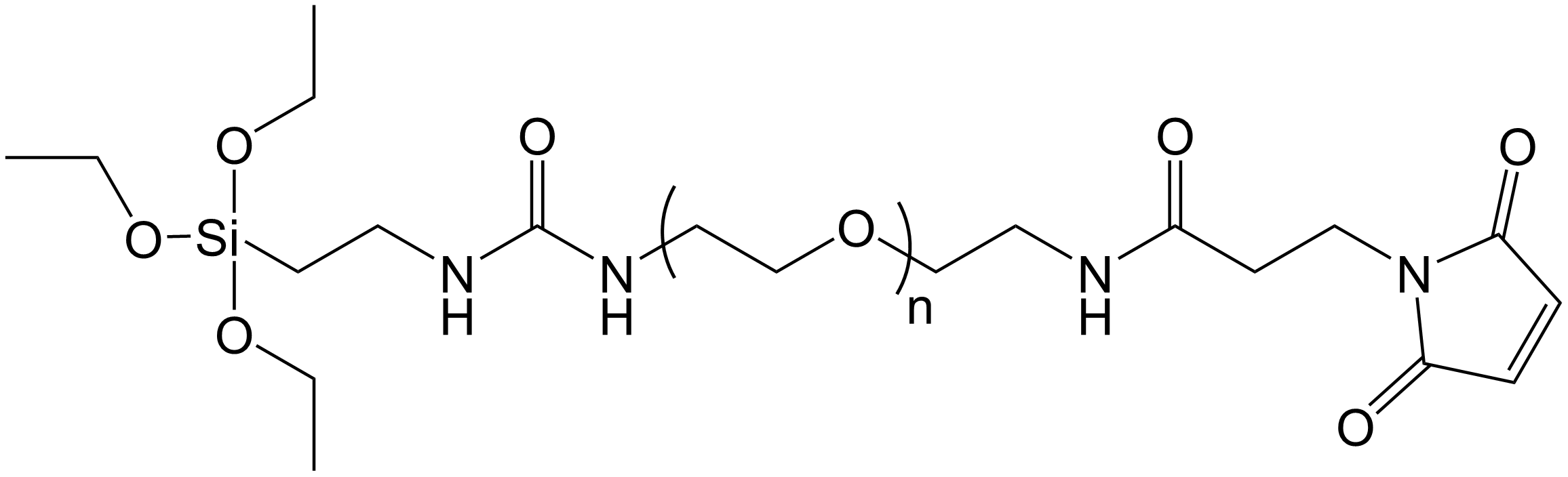
Silane-PEG-Mal (Silane-PEG-Maleimide) is a versatile heterobifunctional PEG linker designed for surface modification and thiol-specific bioconjugation. The terminal trialkoxysilane group hydrolyzes to form reactive silanol intermediates, which subsequently condense with hydroxyl groups present on glass, silica, quartz, silicon wafers, and metal oxide surfaces to generate stable siloxane (Si–O–Si) bonds.
The terminal maleimide group reacts rapidly and selectively with sulfhydryl (thiol) groups on cysteine-containing proteins, peptides, antibodies, enzymes, and other thiol-functionalized molecules under mild physiological conditions, forming stable thioether linkages.
The hydrophilic PEG spacer improves surface hydrophilicity, enhances molecular flexibility, minimizes steric hindrance, and significantly reduces nonspecific protein adsorption. Silane-PEG-Maleimide is widely employed in biosensor fabrication, biochip preparation, microfluidic device functionalization, hydrogel synthesis, cell culture substrates, diagnostic platforms, and biomedical surface engineering.
Applications
-
- Glass surface functionalization
- Silica nanoparticle modification
- Biosensor fabrication
- Protein immobilization
- Antibody immobilization
- Microfluidic device modification
- Thiol-specific bioconjugation
- Hydrogel synthesis
- Surface PEGylation
- Biomaterials research