
Description
General Description
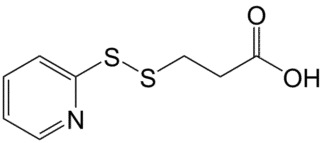
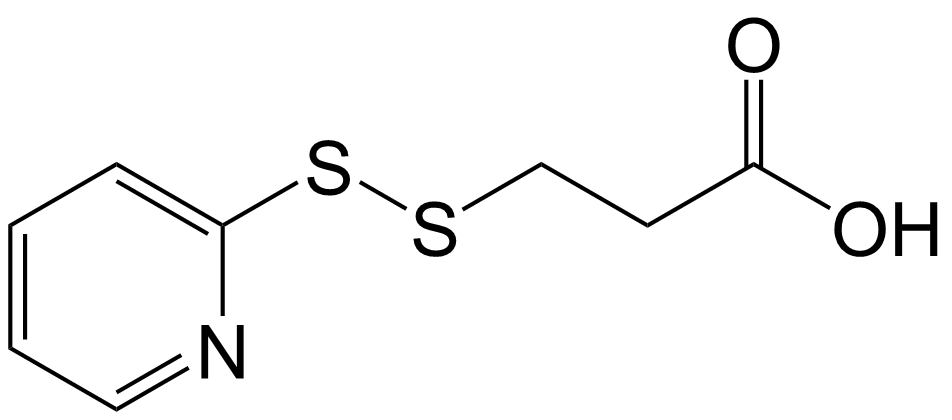
3-(2-Pyridyldithio)propionic Acid (PDPA) is a multifunctional linker designed for the preparation of cleavable bioconjugates and redox-responsive delivery systems. The molecule contains a 2-pyridyl disulfide (PDP) moiety, which reacts efficiently with sulfhydryl-containing biomolecules through thiol-disulfide exchange, forming reversible disulfide linkages while releasing pyridine-2-thione as a byproduct.
The terminal carboxylic acid can be readily activated using carbodiimide coupling reagents such as EDC/NHS, enabling conjugation to primary amines on proteins, peptides, antibodies, polymers, nanoparticles, and other biomolecules. The resulting conjugates retain a reduction-sensitive disulfide bond that can be cleaved intracellularly under reducing conditions, making PDPA particularly useful for targeted drug delivery and controlled release applications.
3-(2-Pyridyldithio)propionic Acid is extensively employed in the synthesis of PEG derivatives, antibody-drug conjugates (ADCs), protein conjugates, polymer therapeutics, nanoparticles, biosensors, and advanced biomaterials.
Applications
- Thiol-selective bioconjugation
- PEG synthesis
- Antibody conjugation
- Protein modification
- Peptide conjugation
- Drug delivery systems
- Redox-responsive linkers
- Nanoparticle functionalization
- Surface modification
- Biomaterials research
Features and Benefits
- Heterobifunctional linker
- Thiol-reactive pyridyl disulfide group
- Terminal carboxylic acid functionality
- Compatible with EDC/NHS coupling
- Cleavable disulfide linkage
- Redox-responsive conjugation
- High coupling efficiency
- Research-grade quality