
Description
General Description
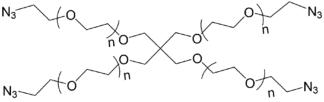
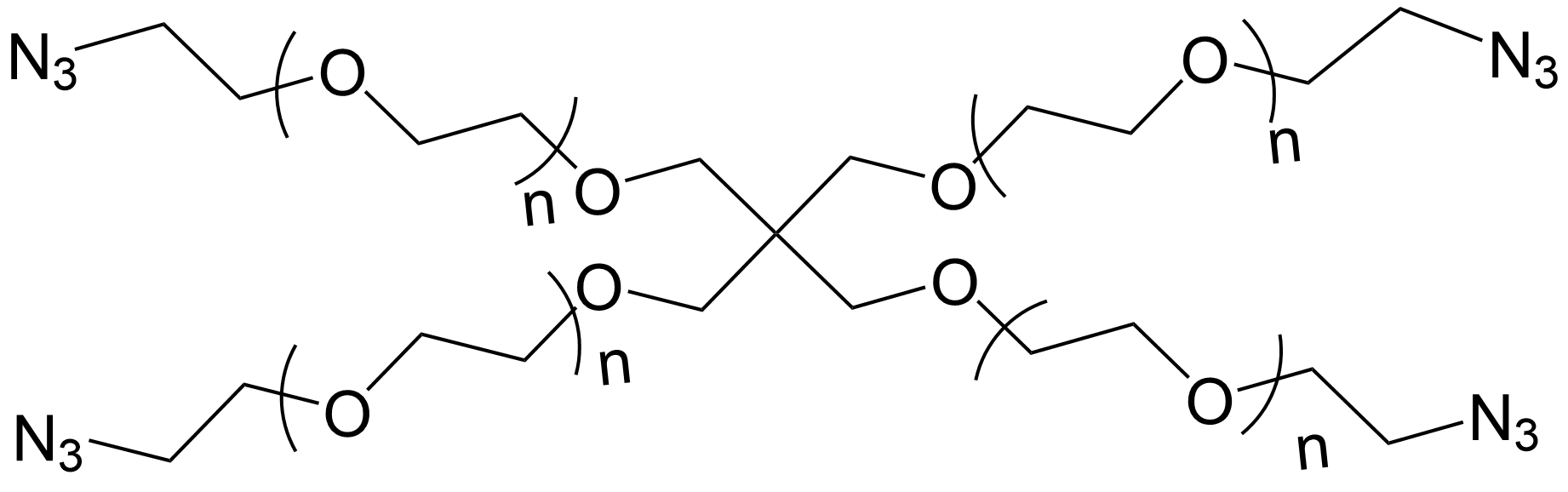
4-Arm PEG-Azide is a branched PEG derivative designed for bioorthogonal conjugation and advanced biomaterials applications. Compared with linear PEG derivatives, the four-arm architecture provides higher functional group density, enhanced crosslinking efficiency, and increased loading capacity for biomolecules and therapeutic agents.
The terminal azide groups readily participate in copper-catalyzed azide-alkyne cycloaddition (CuAAC) and strain-promoted azide-alkyne cycloaddition (SPAAC) with alkyne- and DBCO-functionalized molecules. These highly selective and efficient click chemistry reactions enable the preparation of hydrogels, drug conjugates, nanoparticles, imaging probes, and surface-modified biomaterials under mild conditions.
The PEG backbone provides excellent water solubility, flexibility, biocompatibility, and resistance to nonspecific protein adsorption. 4-Arm PEG-Azide is widely employed in hydrogel preparation, tissue engineering scaffolds, cell encapsulation, nanoparticle functionalization, drug delivery systems, and bioorthogonal chemistry applications.
Applications
- Click chemistry conjugation
- SPAAC conjugation
- CuAAC conjugation
- Hydrogel synthesis
- Tissue engineering
- Cell encapsulation
- Drug delivery systems
- Nanoparticle functionalization
- Surface modification
- Biomaterials research
Features and Benefits
- Four terminal azide groups
- Multi-arm PEG architecture
- Compatible with click chemistry
- Suitable for CuAAC and SPAAC reactions
- High functional group density
- Excellent water solubility
- Excellent biocompatibility
- Low protein adsorption
- Available in multiple molecular weights