
Description
General Description
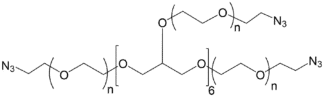
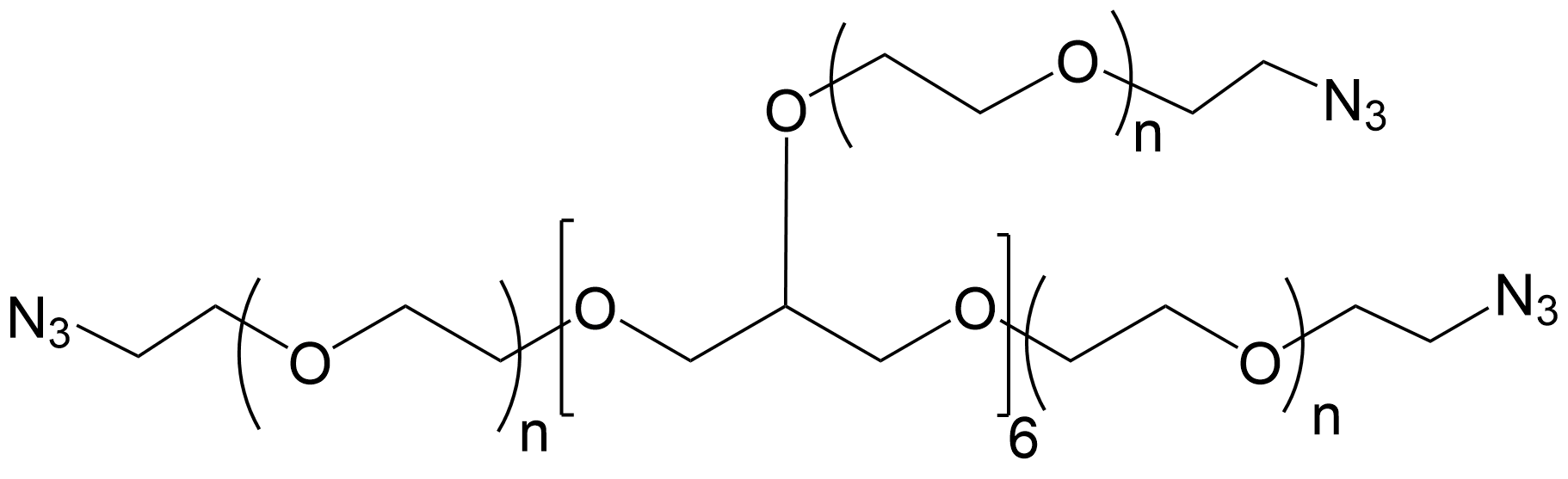
8-Arm PEG N3 is a multifunctional PEG derivative designed for bioorthogonal conjugation and hydrogel fabrication. The eight-arm architecture provides a high density of terminal azide groups, enabling rapid and efficient conjugation with alkyne-functionalized polymers, peptides, proteins, antibodies, nanoparticles, fluorophores, and biomolecules via click chemistry.
The terminal azide groups readily participate in CuAAC reactions with terminal alkynes and SPAAC reactions with strained alkynes such as DBCO and BCN. These highly selective reactions proceed under mild conditions with excellent efficiency, making 8-Arm PEG N3 an ideal building block for hydrogel formation, polymer network synthesis, injectable biomaterials, and surface functionalization.
The PEG backbone provides excellent water solubility, flexibility, and biocompatibility while minimizing nonspecific protein adsorption. Compared with linear PEG derivatives, the eight-arm architecture provides higher crosslinking density and superior network formation for advanced biomaterials.
Applications
- Click chemistry (CuAAC)
- Copper-free click chemistry (SPAAC)
- Hydrogel synthesis
- Polymer crosslinking
- Nanoparticle functionalization
- Surface modification
- Tissue engineering
- Drug delivery systems
- Regenerative medicine
- Biomaterials research
Features and Benefits
- Eight terminal azide groups
- Multi-arm PEG architecture
- Compatible with CuAAC chemistry
- Compatible with SPAAC chemistry
- High crosslinking density
- Excellent water solubility
- Excellent biocompatibility
- Low protein adsorption
- Ideal for hydrogel fabrication