
Description
General Description
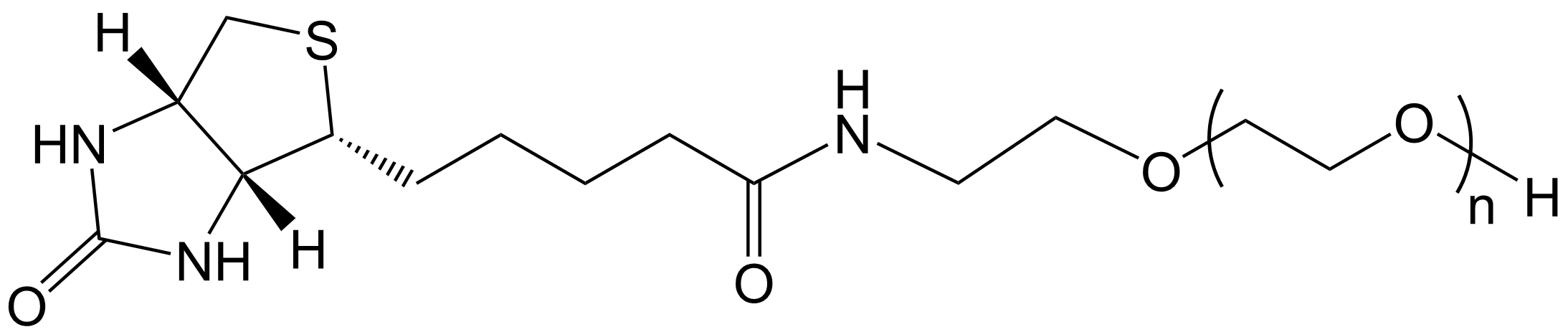
Biotin-PEG-OH is a versatile heterobifunctional PEG linker designed for affinity-based bioconjugation and polymer functionalization. The terminal biotin group exhibits extraordinarily high affinity for streptavidin and avidin (Kd ≈ 10⁻¹⁵ M), making it an ideal reagent for protein immobilization, affinity purification, molecular targeting, biosensors, and diagnostic assays.
The terminal hydroxyl group serves as a convenient synthetic handle and can be readily converted into carboxyl, amine, NHS ester, aldehyde, azide, alkyne, acrylate, methacrylate, maleimide, epoxide, and numerous other functional groups. This flexibility makes Biotin-PEG-OH an important intermediate for preparing customized PEG derivatives and multifunctional biomaterials.
The hydrophilic PEG spacer improves water solubility, molecular flexibility, and biocompatibility while reducing steric hindrance and minimizing nonspecific protein adsorption. Biotin-PEG-OH is widely employed in nanoparticle functionalization, surface modification, targeted drug delivery, molecular imaging, biosensor fabrication, and biomedical research.
Applications
- Streptavidin-based conjugation
- Protein immobilization
- Antibody labeling
- Affinity purification
- Biosensor fabrication
- Surface modification
- Nanoparticle functionalization
- Drug delivery systems
- Molecular imaging
- Biomaterials research
Features and Benefits
- Heterobifunctional PEG linker
- High-affinity biotin functionality
- Terminal hydroxyl group
- Excellent streptavidin/avidin binding
- Excellent water solubility
- Excellent biocompatibility
- Reduced steric hindrance
- Versatile synthetic intermediate
- Available in multiple PEG molecular weights