

Description
General Description
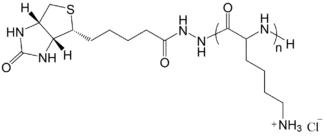
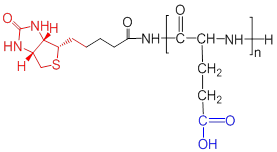
Biotin-Poly(L-Glutamic Acid) is a functional polypeptide designed for affinity-based bioconjugation and advanced drug delivery applications. The terminal biotin group exhibits extremely high affinity toward streptavidin and avidin (Kd ≈ 10⁻¹⁵ M), enabling efficient immobilization, targeting, purification, and molecular assembly.
The biodegradable poly(L-glutamic acid) backbone contains numerous pendant carboxylic acid groups that can be activated using EDC/NHS chemistry or peptide-coupling reagents for conjugation with proteins, peptides, antibodies, drugs, polymers, nanoparticles, and imaging agents.
The combination of a biodegradable polymer backbone, abundant reactive carboxyl groups, and high-affinity biotin functionality makes Biotin-pGlu an excellent material for targeted nanomedicine, polymer-drug conjugates, biosensors, affinity chromatography, hydrogel preparation, and biomaterials development.
Applications
- Streptavidin-mediated conjugation
- Drug conjugation
- Polymer-drug conjugates
- Protein and antibody conjugation
- Nanoparticle functionalization
- Hydrogel synthesis
- Affinity purification
- Surface modification
- Molecular imaging
- Biomaterials research
Features and Benefits
- Terminal biotin functionality
- High-affinity streptavidin/avidin binding
- Biodegradable poly(L-glutamic acid) backbone
- Multiple pendant carboxylic acid groups
- Compatible with EDC/NHS coupling
- Excellent aqueous solubility
- Excellent biocompatibility
- Available in multiple molecular weights