
Description
General Description
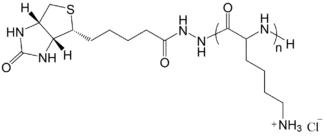
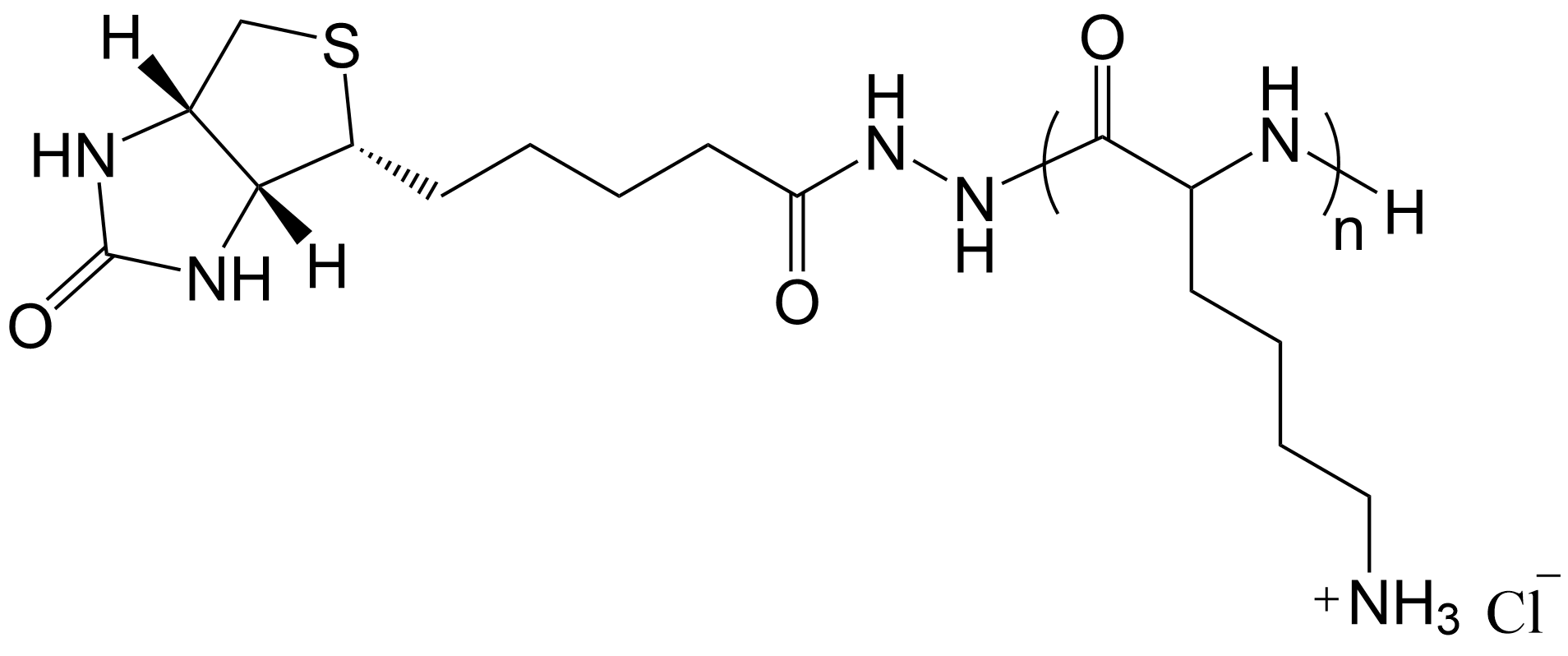
Biotin-Poly(L-Lysine) (Biotin-PLL) Hydrochloride is a functional cationic polypeptide designed for affinity-based bioconjugation and biomedical applications. The terminal biotin group exhibits extremely high affinity for streptavidin and avidin (Kd ≈ 10⁻¹⁵ M), enabling efficient immobilization, targeting, purification, and assembly of biomolecular complexes.
The poly(L-lysine) hydrochloride backbone contains numerous protonated primary amine groups that readily complex with negatively charged nucleic acids such as DNA, RNA, siRNA, and mRNA. These amine groups also react with NHS esters, activated carboxylic acids, aldehydes, epoxides, and other amine-reactive molecules, providing additional opportunities for bioconjugation.
Biotin-PLL·HCl is widely employed in gene delivery, streptavidin-mediated immobilization, biosensor fabrication, cell culture surface modification, nanoparticle functionalization, tissue engineering, and advanced biomaterials research.
Applications
- Gene delivery
- DNA and RNA complexation
- Streptavidin-mediated immobilization
- Cell surface coating
- Protein conjugation
- Nanoparticle functionalization
- Biosensor fabrication
- Surface modification
- Tissue engineering
- Biomaterials research
Features and Benefits
- Terminal biotin functionality
- High-affinity streptavidin/avidin binding
- Cationic poly(L-lysine) backbone
- Multiple primary amine groups
- Excellent nucleic acid binding
- Excellent aqueous solubility
- Suitable for surface functionalization
- Available in multiple molecular weights